Can You Do a Day Trip from Treviso to the Dolomites to Watch the Paralympics?
Here is the full article — clean, copy-paste ready, all links embedded naturally:
Can You Do a Day Trip from Treviso to the Dolomites to Watch the Paralympics?
Let me tell you something that most travel guides will not: the most dramatic sporting experience available in Italy right now is not in a stadium. It is not behind a paywall. And it is not in a city.
It is on a mountainside in the Dolomites, ninety minutes from Treviso, where the best Para alpine skiers in the world are racing down a course called the Olympia delle Tofane at speeds that make your eyes water — in front of a crowd of a few thousand people standing in fresh mountain air, watching something genuinely extraordinary, with the entire backdrop of the eastern Dolomites behind them.
I am Igor Scomparin, a licensed local guide born and raised in the Veneto. I know this drive well. I know the road, I know what you will see along the way, and I know what it feels like to arrive in Cortina d’Ampezzo on a clear March morning when the mountains are white and the atmosphere is electric. If you are in Treviso right now and you have not yet considered making this trip, I am here to tell you that you should consider it seriously — and I am going to tell you exactly how.
What Is Happening in Cortina Right Now?
The Milano Cortina 2026 Paralympic Winter Games run from March 6 to 15, and Cortina d’Ampezzo is the alpine heart of the competition.
The Tofane Centre — the mountain sports complex built around the legendary Olympia delle Tofane track — is hosting the Para alpine skiing events: downhill, super-G, super combined, giant slalom, and slalom, across standing, sitting, and visually impaired categories. Thirty medal events in Para alpine skiing alone make it the most decorated sport of the entire Games. The Cortina Curling Olympic Stadium, originally built in 1955 for the 1956 Winter Olympics, is hosting wheelchair curling and will also serve as the venue for the Closing Ceremony on March 15.
The numbers are striking. Around 665 athletes from across the world. Seventy-nine medal events across six sports. The Paralympic flame was unified in Cortina before the opening ceremony in the Arena di Verona. And the Prosecco DOC Consortium — whose headquarters sit right here in Treviso — is the Official Sparkling Wine of the entire Games, which means that when athletes and officials toast their medals, they are raising a glass of wine produced in the hills you can see from the road between Treviso and Belluno. I wrote in detail about what that partnership means for Treviso and the Veneto if you want to understand the full story before you go.
The Drive Itself: Why This Journey Is Worth Taking Slowly
From Treviso to Cortina d’Ampezzo is approximately 130 kilometres. By car, under normal conditions, the journey takes between ninety minutes and two hours. The route is one of the most beautiful drives in northeastern Italy, and it deserves more attention than most people give it.
You leave Treviso heading north on the A27 autostrada, the same motorway that follows the course of the Piave River up from the plains into the mountains. For the first thirty kilometres, the landscape is still the flat Veneto countryside — fields, vine rows, the occasional villa glimpsed through a line of poplar trees.
Then, gradually, almost imperceptibly, the land begins to rise. The foothills appear first, soft and wooded. Then the town of Vittorio Veneto, which sits at the precise point where the plain meets the mountains and which carries, in its very name, the memory of the final Italian victory of the First World War. Then Belluno, the provincial capital, cradled in a wide valley with the first serious peaks rising on every side.
From Belluno you leave the autostrada and follow the SS51 — the Alemagna road, which has been the main route between the Veneto plains and the Dolomites for centuries — north toward Cortina. The road follows the Piave River valley, then climbs through the narrowing gorge at Tai di Cadore, past the lake of Centro Cadore, and finally up through the last ascent before the road opens out onto the extraordinary amphitheatre of mountains that cradles Cortina d’Ampezzo.
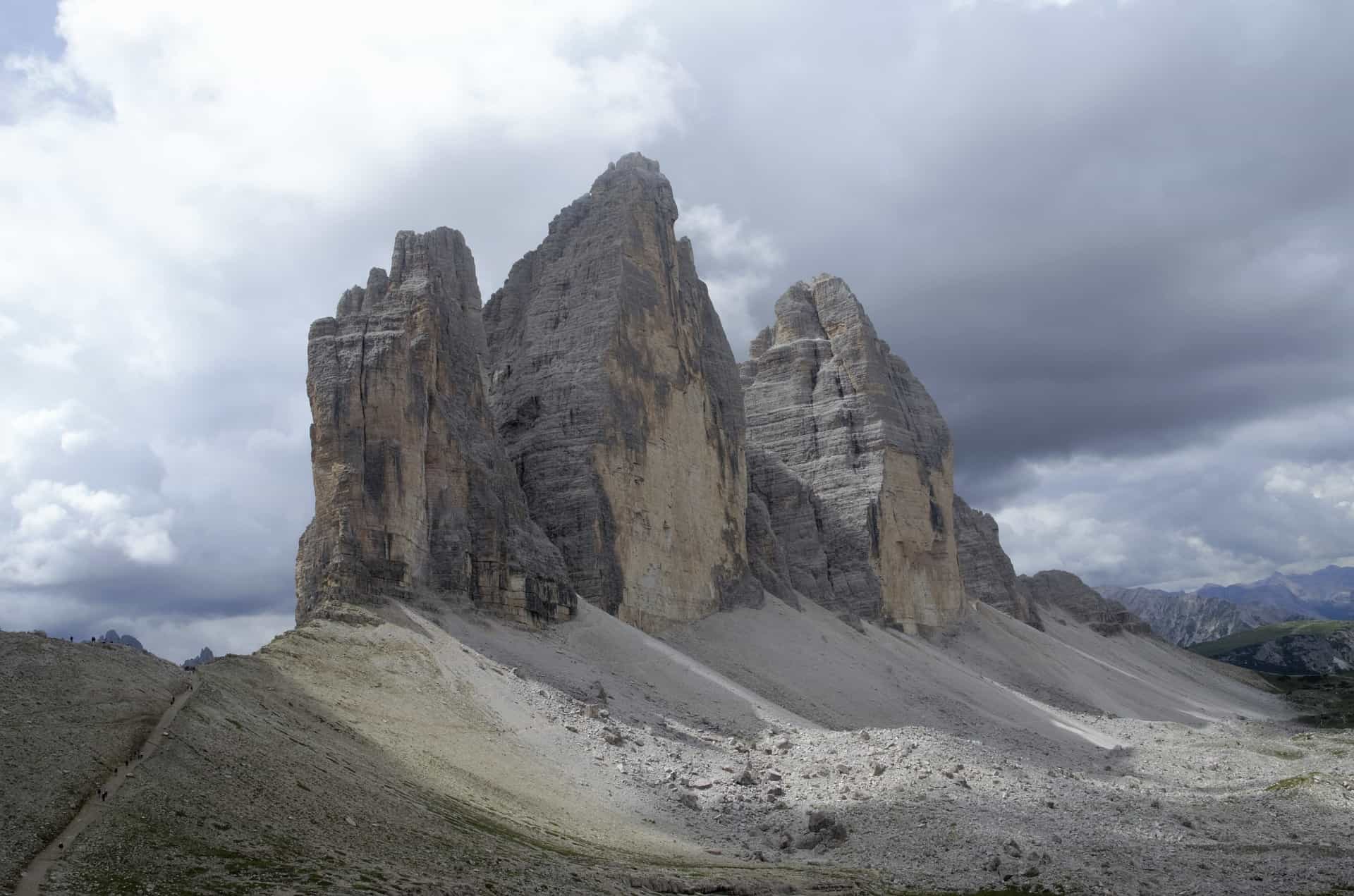
The first view of that amphitheatre — the Tofane to the west, the Cristallo to the northeast, the Faloria to the east, all of them over three thousand metres and white with snow in March — is one of those travel moments that stops conversation in the car. Every time. I have driven this road dozens of times and I have never not felt it.
If you have time, the stretch through Cadore is worth a pause at Pieve di Cadore, the birthplace of Titian — one of the greatest painters of the Venetian Renaissance, born in these mountains in the 1480s and deeply shaped by the quality of light that anyone who has spent time in the Dolomites will immediately recognise in his work. The small museum in the house where he was born is modest but genuine.
What You Will Find in Cortina During the Games
Cortina d’Ampezzo during the Paralympics is a different beast from the Olympic period that preceded it.
The Olympic Games — which ran from February 6 to 22 — brought the full weight of global media, sponsor infrastructure, and diplomatic delegations to the town. The Paralympic Games are, by comparison, quieter. More intimate. And in many ways more rewarding for the independent traveller.
The competition venues are accessible. The atmosphere in the town is warm and international without being overwhelming. The Corso Italia — the main pedestrian street of Cortina, lined with luxury boutiques and mountain restaurants — is animated but walkable. And the mountains themselves, indifferent to everything that happens at their feet, are simply magnificent.
Casa Italia, the official Italian hospitality house for the Games, is open at the Galleria Farsettiarte in Piazza Roma throughout the Paralympic period, from 9am to 7:30pm. This is where the Prosecco DOC bar is located — a dedicated menu featuring the wines of the sixteen producer companies who are official partners of the Games. If you want to toast the mountain with a glass of Prosecco Superiore DOCG from the hills above Treviso, this is exactly the place to do it.
The competition schedule for Para alpine skiing on the Tofane runs across multiple days through the Games period. Check the official Milano Cortina 2026 website for the specific event times — races typically begin in the late morning, which means that if you leave Treviso by 7:30am you will arrive in Cortina with time for breakfast before the action starts.
How to Get There: The Options
By private car — the most flexible and the most rewarding option. The route north on the A27 from Treviso to Belluno, then the SS51 to Cortina, is straightforward and well-signposted. Parking in Cortina during the Games requires some planning — the town has park-and-ride facilities for major event days. Check the official transport information for the Games before you drive.
By Cortina Express bus — a direct bus service operated by Cortina Express departs from Treviso (Silea Via Arma di Cavalleria) up to four times daily and reaches Cortina in approximately two hours. Tickets can be purchased in advance online. This is a genuinely good option if you do not want to drive and prefer to watch the mountains go by from a comfortable seat.
By Dolomiti Bus — Dolomiti Bus operates services from Treviso to Cortina twice daily, with a journey time of approximately two hours and fifteen minutes. Tickets are inexpensive and can be booked through the Dolomiti Bus website.
By private transfer with me — if you want the mountain experience without the logistics, I arrange private transfers and guided day trips from Treviso to Cortina for the entire Games period. You travel in a private vehicle, I handle the driving and parking, and I can build the day around your interests — whether that is the Para alpine skiing, a walk in the mountains, lunch at a proper Cortina restaurant, or a combination of all three. Get in touch to arrange a private day trip.
A Full Day in Cortina: How I Would Plan It
Here is the itinerary I would build for a Treviso-to-Cortina Paralympic day, if I were designing it from scratch.
Depart Treviso at 7:30am. The road north is quiet at that hour, the light is extraordinary over the foothills, and you arrive in Cortina before 9:30am with the mountains at their most spectacular — the early morning light on the Tofane turns the rock faces pink and amber in a way that photographers spend careers chasing.
Breakfast in Cortina at one of the bars on the Corso Italia. A proper Italian breakfast — coffee, cornetto, orange juice — eaten standing at the bar while the town wakes up around you. The contrast between the mountain air outside and the warmth of a Cortina bar is one of the specific pleasures of the Dolomites in winter.
Then, depending on the day’s competition schedule, make your way to the Tofane sports complex for the Para alpine skiing. The viewing areas on the course are free for most spectator sections — check the official site for ticketed grandstand areas if you want the best positions. Watch the athletes come down the Olympia delle Tofane and try, as you watch, to register what you are actually seeing: human beings with physical impairments that would stop most people from walking confidently on flat ground, skiing a World Cup alpine course at competitive speeds, with a precision and courage that is simply staggering.
Lunch in Cortina. The town has restaurants at every price point, from the mountain rifugi on the slopes to the serious restaurants on the Corso Italia. I recommend a rifugio if you can manage the walk or a short cable car ride — eating polenta and venison at altitude, with the Dolomites outside the window, is one of the definitive Veneto experiences and one that most travellers never think to seek out.
Afternoon: a walk. The area around Cortina offers winter walks on cleared paths that require no special equipment — the Lake Ghedina trail, the walk toward the base of the Tofane, the promenade above the town toward the Tre Croci pass — all of them accessible and all of them staggeringly beautiful. The Dolomites in March, with the snow still firm and the sky that particular deep blue that altitude and cold air produce, are worth the drive on their own.
Late afternoon: Casa Italia for a glass of Prosecco DOC in the official Games hospitality house. Then the drive back south to Treviso, through the mountains as the afternoon light fades and the valley towns light up one by one below you.
You will be back in Treviso in time for dinner. And dinner in Treviso — a plate of radicchio risotto at one of the osterie in the historic centre, a glass of Prosecco, a walk along the canal in the evening — is the perfect ending to a day that began at altitude among the best Paralympic athletes in the world.
Why This Combination — Treviso and the Dolomites — Is Uniquely Veneto
There is something particular about the geography of the Veneto that I try to make every guest understand: this region contains, within a radius of roughly two hours, the full range of Italian landscape and culture.
You can have breakfast by a medieval canal in Treviso. You can have lunch at altitude in the Dolomites. You can have an aperitivo in the Prosecco hills on the way back. You can have dinner beside the Sile River in a city where the city walls built by Venice five hundred years ago still stand entirely intact.
No other region in Italy offers this range in such a compact space. The Veneto is not just the territory between Venice and the Alps — it is one of the most richly layered regions in Europe, and Treviso sits at its geographical and cultural heart.
The Paralympics are the occasion to see the mountains. Treviso is the base from which to see everything else. And March 2026 — right now, while the Games are still running — is one of those moments when the whole region is showing its best face to the world.
Come and see it while it lasts.
📩 Get in touch to arrange a private day trip from Treviso to Cortina for the Paralympics. I handle the logistics — you just watch the mountains.
Frequently Asked Questions
How long does it take to get from Treviso to Cortina d’Ampezzo?
By car, the journey from Treviso to Cortina d’Ampezzo takes approximately ninety minutes to two hours under normal conditions, covering around 130 kilometres. The route follows the A27 autostrada north from Treviso to Belluno, then the SS51 state road through the Cadore valley to Cortina. By bus, the Cortina Express service from Treviso takes approximately two hours and runs up to four times daily. Dolomiti Bus also operates twice-daily services in approximately two hours fifteen minutes. By private transfer, the timing is similar to driving, with the added convenience of door-to-door service and no parking concerns in Cortina during the Games period.
Do you need tickets to watch the Para alpine skiing in Cortina?
Most viewing areas along the Para alpine skiing course on the Tofane are accessible without tickets for general spectator positions. However, grandstand seats and premium viewing areas are ticketed and require advance booking through the official Milano Cortina 2026 website. During the Games period, it is strongly advisable to check the official competition schedule and transport information before travelling, as traffic management and access restrictions around the venues can vary by event day. For the most straightforward experience, a private guided day trip from Treviso removes all of the logistics and lets you focus on the spectacle.
Can I combine a trip to Cortina with a stop in the Prosecco hills?
Absolutely — and I would strongly recommend it. The route from Treviso to Cortina passes through the Prosecco DOC production zone and within close range of the UNESCO-listed hills of Conegliano and Valdobbiadene. On a private day trip, it is entirely possible to stop for a morning tasting at a family-run cantina in the Prosecco hills before continuing north to Cortina for the afternoon competition. The connection between the two is more than just geographical convenience — Prosecco DOC is the Official Sparkling Wine of the Games, which means that the wine you taste in the hills above Treviso in the morning is the same wine being poured at the official Casa Italia hospitality house in Cortina in the afternoon. That is a story worth living in person.
Igor Scomparin is a licensed Tour Guide and Tour Leader for the Veneto Region, certified Travel Agency Director, and founder of tourleadertreviso.com. He has been featured in Rick Steves’ travel guides to Italy and Europe since 2008.