Cycling in Treviso: The Best Routes Along the Rivers
Discover why Treviso is one of Italy’s most bike-friendly cities. From scenic riverside paths to Prosecco country routes, here’s your complete guide to cycling through Treviso and the surrounding Veneto region.
Why Treviso is a Cyclist’s Paradise
While tourists flock to Venice’s car-free streets, savvy cyclists have discovered that Treviso offers something even better: a perfectly flat, bicycle-friendly city surrounded by some of Italy’s most beautiful cycling routes. Unlike Venice where you carry your bike up and down countless bridges, Treviso’s terrain is pancake-flat, making it ideal for cyclists of all abilities and ages.
Treviso has cultivated a genuine cycling culture that goes far beyond tourism. You’ll see everyone on bikes here – businesspeople commuting to work in suits, elderly residents doing their daily shopping, parents transporting children to school, and groups of friends meeting for weekend rides. The city has invested heavily in cycling infrastructure, with dedicated bike lanes throughout the historic center and an extensive network of paths connecting to the surrounding countryside.
The rivers are the secret to Treviso’s cycling appeal. The Sile River, one of Europe’s most important spring-fed rivers, flows around the city and provides nearly 100 kilometers of maintained cycling paths that wind through countryside, villages, and nature reserves all the way to the Adriatic Sea. The Botteniga and other smaller waterways add additional scenic routes. These riverside paths offer safe, car-free cycling with constantly changing landscapes – from urban historic centers to rural farmland to wetland nature reserves.
What makes Treviso special for cyclists is the combination of urban accessibility and natural beauty. You can cycle from your hotel in the historic center to complete countryside within 10 minutes. The flat terrain means you can cover significant distances without exhausting yourself, making it possible to explore extensively even if you’re not a serious cyclist. And because the region hasn’t been overrun by cycling tourism like Tuscany or other famous areas, the routes remain peaceful and authentic.
The Restera: Treviso’s Signature Riverside Route
Route Overview and Distance
The Restera is Treviso’s most famous cycling route, following the Sile River from the city center all the way to the Adriatic coast near Venice – a total distance of approximately 90 kilometers. Don’t let that distance intimidate you; very few people cycle the entire route in one day. Instead, locals and visitors typically choose sections based on their time, fitness level, and interests.
The route is officially called “Via Alzaia” (the towpath) because it follows the historic path where horses once pulled barges along the river. This heritage means the path is completely flat and well-maintained throughout its length. The surface varies from paved sections near urban areas to packed gravel in rural stretches, but it’s suitable for any type of bicycle including city bikes and touring bikes.
Most Popular Sections for Day Trips
Treviso to Quinto di Treviso (8 km one way)
This is the perfect introduction to the Restera for casual cyclists or families with children. The route starts from Treviso’s city walls and follows the right bank of the Sile River through parks and residential areas before opening into countryside. The small town of Quinto di Treviso makes an ideal turnaround point, with several cafés and restaurants for refreshments.
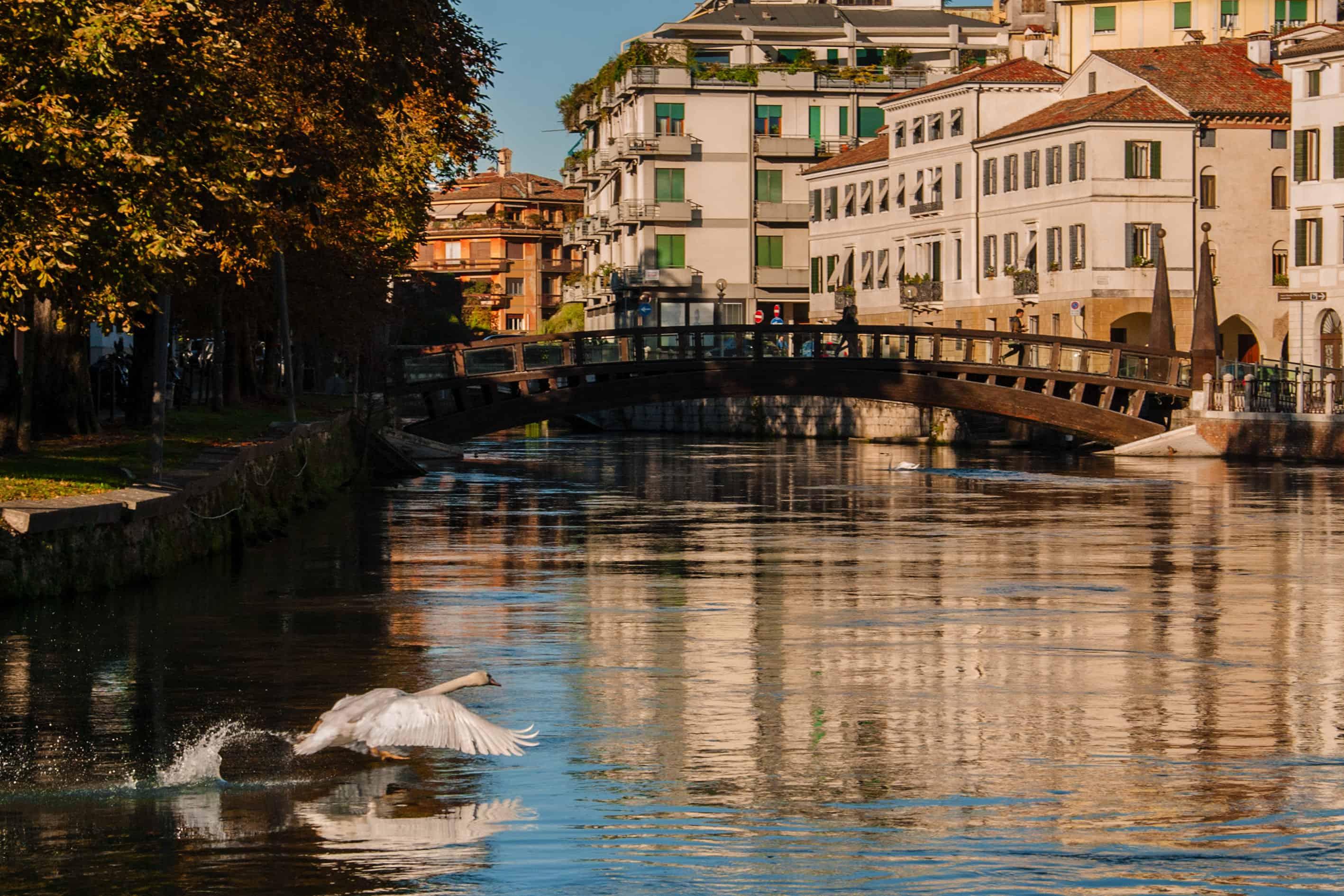
Along this section, you’ll pass under ancient stone bridges, through tree-lined paths that provide shade in summer, and alongside traditional Venetian villas that once belonged to noble families. The river here is wide and peaceful, with swans, ducks, and herons commonly spotted. Many locals cycle this route for exercise, so you’ll blend in with the regular traffic of joggers, cyclists, and dog walkers.
Treviso to Silea (15 km one way)
Extending beyond Quinto brings you to Silea, a charming riverside village that’s popular with Treviso residents for weekend lunch excursions. This route showcases the Sile at its most picturesque, with the river widening in places and creating small islands overgrown with willows and poplars. The landscape becomes increasingly rural, with farms, vineyards, and vegetable gardens replacing suburban development.
Silea offers several excellent restaurants where locals gather for traditional Sunday lunches. Trattoria al Sile and Osteria Ai Do Leoni are favorites, serving fresh fish from the Adriatic, homemade pasta, and local wines. Many cyclists make Silea their destination specifically for lunch, then cycle back to Treviso in the afternoon – a quintessentially Italian way to spend a Sunday.
Treviso to Casale sul Sile (25 km one way)
For stronger cyclists or those wanting a half-day adventure, Casale sul Sile represents a satisfying destination. This historic village features a beautiful 16th-century villa and a charming historic center. The route passes through the Sile River Natural Park, where the landscape becomes increasingly wild and the birdwatching opportunities excellent.
Casale sul Sile is known among locals for its fish restaurants specializing in freshwater fish from the Sile and seafood from nearby lagoons. The town also has a small museum dedicated to river navigation history, explaining how the Sile served as a crucial transportation route for centuries. From Casale, you can either return to Treviso or continue toward the coast if you’re ambitious.
Technical Details and Practical Information
The Restera is clearly marked throughout its length with signs indicating distances and directions. You’ll rarely get lost, though having a GPS or smartphone with offline maps provides extra security. Cell phone coverage is generally good along the entire route, even in rural sections.
The path is busiest on weekends, particularly Sunday mornings when cycling groups and families dominate. Weekday mornings and late afternoons offer the most peaceful cycling with minimal traffic. Summer evenings are magical, with golden light filtering through the trees and the temperature cooling to perfect cycling conditions.
Water fountains appear sporadically along the route, but it’s wise to carry water, especially during summer. Puncture repair kits are essential since some rural sections are far from bike shops. Most towns along the route have at least one bar or café where you can stop for coffee, snacks, or meals.
Urban Routes: Cycling Within Treviso’s Historic Center
The City Walls Circuit
Treviso’s Renaissance-era city walls, built by the Venetian Republic in the 16th century, create a perfect cycling loop around the historic center. The complete circuit is approximately 4-5 kilometers and takes about 20-30 minutes at a leisurely pace. This route offers elevated views of both the historic center and the surrounding countryside, making it excellent for photography.
The walls circuit is partly paved and partly gravel, easily manageable on any bicycle. Three impressive gates punctuate the route: Porta San Tommaso, Porta Santi Quaranta, and Porta Altinia. Each gate is an architectural monument worth pausing to examine. The outer moat, now dry in most sections, has been converted into parks and gardens where locals picnic and relax.
Local cyclists use the walls circuit for exercise, often completing multiple laps as their daily workout. It’s also popular with parents teaching children to ride, since the route is car-free and relatively flat. Early morning sees the most serious cyclists, while late afternoon brings families and casual riders.
The Canal Routes
Several cycling routes follow Treviso’s internal canals, providing an intimate view of the historic center’s most picturesque areas. The Buranelli Canal route takes you past colorful buildings reflected in the water, alongside the Pescheria (fish market), and through the atmospheric old town neighborhoods where washing still hangs above narrow streets.
These canal routes require careful navigation since you’ll share streets with pedestrians and occasional cars. The narrow medieval streets aren’t designed for speed, making these routes more about sightseeing than covering distance. Stop frequently to admire the painted facades, peek into courtyards, and photograph the numerous bridges crossing the waterways.
The Cagnan Canal route is particularly beautiful, running from the fish market through residential areas and eventually connecting to the Sile River paths. This route showcases how the waterways integrate into daily life, with houses built directly over the canal and small bridges connecting neighborhoods.
Connecting Routes to Surrounding Towns
Treviso serves as a hub for cycling routes extending in all directions to nearby towns. Well-marked paths connect to Castelfranco Veneto (25 km), Conegliano (35 km), and numerous smaller villages. These routes primarily follow minor country roads with light traffic, offering safe cycling through agricultural landscapes.
The route toward Zero Branco and Mogliano Veneto (15-20 km) is particularly popular for its combination of countryside and small-town atmosphere. You’ll cycle past farms producing Treviso radicchio, vineyards, and traditional villas. Several agriturismos along these routes welcome cyclists for meals, offering farm-fresh ingredients and local wines.
Prosecco Country: Cycling Through UNESCO World Heritage Vineyards
The Prosecco Hills Challenge
While Treviso itself is flat, the nearby Prosecco region offers more challenging terrain for cyclists who want hills and dramatic views. The Prosecco Hills, designated a UNESCO World Heritage site in 2019, provide some of Italy’s most scenic cycling with steep climbs rewarded by spectacular vistas over vineyards, villages, and mountains.
The classic Prosecco route runs from Conegliano to Valdobbiadene, approximately 30 kilometers through the heart of DOCG production. This route isn’t for beginners – the hills are serious, with some climbs exceeding 10% gradient. However, e-bikes have democratized this route, allowing cyclists of moderate fitness to enjoy the scenery without suffering too much on the climbs.
The reward for the effort is cycling through landscapes that appear on Prosecco labels worldwide. Endless rows of vines march up hillsides, medieval villages crown hilltops, and family-run wineries offer tastings to passing cyclists. During harvest season (September-October), the vineyards buzz with activity and the air fills with the sweet scent of fermenting grapes.
Recommended Prosecco Cycling Routes
The Ring Route (Anello del Prosecco)
This 45-kilometer loop is the most popular organized route, starting and ending in Valdobbiadene. It climbs through villages like San Pietro di Barbozza, Guia, and Santo Stefano, each offering different perspectives on the vineyard landscape. The route includes sections of the famous Cartizze area, where the most prestigious Prosecco is produced.
Well-placed signs throughout the route indicate distances, directions, and points of interest. Several variants exist, ranging from 25 to 60 kilometers, allowing cyclists to choose routes matching their fitness and available time. Rest areas with picnic tables appear regularly, and nearly every village has at least one bar or restaurant.
The Maser to Asolo Route
This alternative route explores the southern Prosecco hills, connecting the Palladian Villa Barbaro in Maser to the hilltop town of Asolo (known as “the city of a hundred horizons”). The 15-kilometer route includes significant climbing but rewards with exceptional views and cultural attractions. Villa Barbaro, a UNESCO World Heritage site, features frescoes by Veronese and represents Renaissance architecture at its finest.
Asolo, perched on a hilltop, offers spectacular panoramic views extending to the Dolomites on clear days. The medieval town is worth exploring on foot after locking your bike. Numerous restaurants and wine bars make it perfect for lunch before the descent back to Maser or continuing to Treviso (another 30 kilometers primarily downhill).
Winery Stops and Wine Tourism
Cycling through Prosecco country naturally involves wine tasting, but cyclists must balance enjoyment with safety. Many wineries welcome cyclists, offering tastings and tours. Small producers are often the most interesting, though they may require advance booking. Having a local guide or tour organizer can facilitate access to wineries that don’t normally receive walk-in visitors.
The strategy locals use is planning winery visits toward the end of their ride, after most climbing is complete. Many cyclists taste wine at lunch or at their final destination, then arrange transportation back to Treviso rather than cycling after drinking. Several companies offer supported cycling tours where a van carries luggage and transports cyclists who’ve enjoyed too much Prosecco to safely continue.
Practical Information for Cycling in Treviso
Bicycle Rental Options
Treviso offers numerous bicycle rental options, from traditional city bikes to road bikes and e-bikes. Prices typically range from €15-25 per day for standard bikes, €30-50 for road bikes, and €40-60 for e-bikes. Many hotels offer free bicycle use to guests, though these are usually basic city bikes suitable only for flat urban cycling.
Specialized cycling shops like Cicli Piave and Bici & Baci rent quality touring bikes and road bikes for serious cyclists planning longer routes or Prosecco hills excursions. These shops can also provide route advice, repair services, and accessories like panniers or GPS units. E-bike rentals have exploded in popularity, making the hillier routes accessible to cyclists who wouldn’t attempt them on traditional bikes.
Multi-day rentals usually receive discounts, and some rental shops offer one-way rentals allowing you to pick up in Treviso and drop off in Venice or other locations (though this typically incurs additional fees). Always inspect the bicycle before departing, checking brakes, tires, and gears. Ensure you receive a lock, lights (required by law), and a repair kit.
Best Seasons for Cycling
Treviso’s climate makes cycling enjoyable nearly year-round, though each season has distinct characteristics. Spring (April-June) offers ideal conditions: moderate temperatures, blooming landscapes, and fewer tourists. The Prosecco hills explode with color as wildflowers bloom and vines develop new growth.
Summer (July-August) can be hot, with temperatures exceeding 30°C (86°F). Early morning or late afternoon rides are most comfortable. The advantage of summer is long daylight hours allowing extensive exploration. The rivers provide cooling breezes, and numerous swimming pools and water features along routes offer refreshment.
Autumn (September-November) rivals spring for cycling conditions, with the added bonus of harvest season in Prosecco country. Temperatures moderate, and the landscape transforms to golden yellows and rusty reds. Wine festivals and food celebrations occur throughout the region. Late autumn brings the Radicchio harvest, when fields display the distinctive burgundy color of Treviso’s famous vegetable.
Winter (December-February) sees fewer cyclists but isn’t impossible. Temperatures rarely drop below freezing, and sunny winter days offer excellent cycling with dramatic light for photography. The trade-off is shorter days and occasional rain. Winter cycling requires appropriate clothing and lights, but rewards with empty paths and authentic encounters with locals who appreciate your dedication.
Safety Considerations and Rules
Italian traffic law requires cyclists to use lights after sunset and in poor visibility. Helmets aren’t legally required for adults but are strongly recommended. Cycling paths have priority over cars at intersections, but defensive cycling is wise since not all drivers respect these rules.
The riverside paths are generally very safe, being separated from car traffic. Urban cycling requires more attention, particularly in the historic center where you’ll share space with pedestrians. Ring your bell to alert pedestrians of your approach, but don’t expect them to move quickly – pedestrians traditionally have right of way in most situations.
Bicycle theft exists in Treviso as in any Italian city, though it’s less problematic than Rome or Milan. Always lock your bicycle, even for brief stops. Use a quality lock and secure both frame and wheels to something immovable. Most restaurants and businesses don’t mind bicycles parked near their entrances if you ask permission.
Emergency numbers: 112 (general emergency), 118 (medical), 113 (police). Most Italians speak limited English, but emergency operators usually have English speakers available. The healthcare system is excellent, and cyclists involved in accidents receive prompt care.
Cycling Etiquette and Local Customs
Italian cycling culture has unwritten rules that help everyone get along. On shared paths, slower cyclists keep right, allowing faster cyclists to pass on the left. A bell ring or “permesso” (excuse me) announces your intention to pass. Groups cycling together ride single file on narrow paths, never more than two abreast.
Locals often greet passing cyclists with “buongiorno” or a hand wave. Returning these greetings is polite and can lead to friendly conversations at rest stops. Cycling clubs are common and usually welcome foreign riders joining for a day. If you see a group stopped at a bar, it’s acceptable to ask if you can join them – Italian cyclists are generally friendly and enjoy sharing route recommendations.
Respect for private property is expected. While cycling through agricultural areas, stay on marked paths and don’t enter private vineyards or farms without permission. Many Prosecco producers welcome visitors, but call ahead rather than arriving unannounced. Photographing private villas from public paths is acceptable, but don’t trespass for better angles.
Combining Cycling with Other Activities
Cycling and Wine Tasting Tours
Organized cycling and wine tasting tours solve the logistical challenges of visiting wineries independently. Professional guides lead groups through Prosecco country, handling all arrangements including winery bookings, tastings, and lunch. Support vehicles carry supplies and provide transportation for anyone who’s overindulged or simply tired.
These tours range from leisurely half-day excursions to multi-day adventures covering extensive territory. The best tours focus on small family producers rather than commercial operations, providing authentic encounters with winemaking families who share generations of knowledge. Guides typically speak English and Italian, facilitating conversations that independent travelers might struggle to have.
E-bike tours have become particularly popular, allowing participants to enjoy hillier routes without excessive physical strain. The electric assist makes it possible to visit wineries spread across challenging terrain, expanding the range of experiences possible in a single day.
Cycling to Venetian Villas
The Veneto region contains hundreds of Palladian villas and other aristocratic residences built during Venice’s golden age. Many are accessible by bicycle from Treviso, creating cultural cycling excursions that combine exercise, architecture, and history. Villa Barbaro in Maser (30 km), Villa Emo in Fanzolo (15 km), and numerous others offer organized visits.
These villa visits require planning since most have specific visiting hours and may require advance booking. The bicycle journey through countryside adds dimension to the experience, showing how these villas related to the agricultural estates they commanded. Many villas sit within working farms still producing wine and olive oil, available for purchase.
Multi-Day Cycling Adventures
Ambitious cyclists can plan multi-day routes exploring the entire Veneto region. The Sile River route from Treviso to the Adriatic coast can be completed over two days with an overnight stop in a riverside town. Combining this with routes through Prosecco country and visits to Padua, Vicenza, or Venice creates a week-long cycling vacation.
Several companies specialize in supported multi-day cycling tours, transporting luggage between hotels while cyclists enjoy each day’s route carrying only essentials. These tours typically include accommodation in agriturismos or small hotels, meals featuring regional specialties, and detailed route information with GPS tracks.
Independent multi-day cycling is also feasible for experienced cycle tourists. The network of minor roads and cycling paths makes navigation relatively easy, and accommodation options exist at all price levels. Detailed cycling maps are available from tourist offices and cycling shops, showing routes, distances, elevation profiles, and services along the way.
Family Cycling in Treviso
Routes Suitable for Children
Treviso’s flat terrain and car-free paths make it exceptional for family cycling. The city walls circuit offers safe cycling for children learning to ride, with no cars and minimal gradients. Parents can supervise easily while children gain confidence on their bikes.
The Restera sections nearest Treviso (up to Quinto di Treviso) are perfect for families, offering interesting scenery without excessive distance. Children enjoy watching boats, spotting wildlife, and playing in parks along the route. Several playgrounds punctuate the path, providing rest stops where kids can burn energy before continuing.
Many families with young children use cargo bikes or bikes with child trailers, allowing parents to transport kids too young to cycle independently. These bikes are available from rental shops, though they should be reserved in advance. Older children typically ride their own bikes, with parents setting modest distance goals matching their stamina.
Making Cycling Fun for Kids
Successful family cycling involves building in attractions beyond just the ride. Plan routes that include playgrounds, gelato stops, and interesting sights like the fish market or feeding swans on the river. Letting children set some pace keeps frustration minimal – this isn’t about covering maximum distance but creating positive experiences.
Treasure hunts or scavenger hunts work well for keeping children engaged. Create lists of things to spot along the route: specific birds, colored boats, bridge types, or architectural details. Photography contests where kids compete to take the best pictures of designated subjects add creative elements to the excursion.
Pack snacks and drinks in abundance. Children burn energy quickly and need frequent refueling. Italian bars along routes welcome families and usually have bathrooms, sandwiches, and treats. The Italian culture of including children in most activities means families never feel unwelcome stopping for refreshments.
Conclusion: Embrace Treviso’s Cycling Culture
Cycling in Treviso offers something increasingly rare in modern tourism: the opportunity to explore at your own pace, following routes locals actually use, and accessing landscapes and experiences that cars cannot reach. Whether you’re cycling the riverside paths for gentle sightseeing, challenging yourself on Prosecco country climbs, or simply using a bicycle to navigate the historic center efficiently, you’ll discover that two wheels provide the perfect speed for experiencing the Veneto region.
The beauty of Treviso’s cycling culture is its authenticity. You’re not cycling through routes created for tourists but sharing paths that locals have used for generations. The grandmother cycling to market, the businessman commuting to work, and the weekend cycling club are all part of the same cycling ecosystem that welcomes visitors who respect local customs and embrace the lifestyle.
The bicycle fundamentally changes how you experience a place. The slower pace allows you to notice details that car windows frame for just seconds – architectural elements, seasonal changes in vegetation, aromatic shifts from vineyards to bakeries to coffee roasters. You become part of the landscape rather than an observer passing through it. The physical effort of cycling creates a connection to the terrain that passive tourism cannot replicate.
Treviso rewards cyclists with experiences that go beyond transportation. Every ride becomes an adventure with unexpected discoveries: a perfect canal reflection you wouldn’t have seen from a car, a conversation with a local cyclist who recommends his favorite winery, a vista over Prosecco hills earned through the climb that preceded it. These moments accumulate into memories that define a trip as truly special.
So rent a bicycle, pack some water and snacks, and set out to explore Treviso and its rivers. Follow the Sile toward the Adriatic, climb into Prosecco country, or simply cycle lazily through the historic center. You’ll return tired but satisfied, having experienced the Veneto the way locals do – at bicycle speed, with freedom to stop whenever something catches your interest, and with the knowledge that you’ve discovered the real Treviso that lies beyond the tourist maps.
Frequently Asked Questions
Do I need to be an experienced cyclist to enjoy cycling in Treviso?
Absolutely not. Treviso is perfect for cyclists of all abilities precisely because it’s completely flat and has well-maintained, car-free paths. If you can ride a bicycle at all, you can enjoy Treviso’s cycling routes. The Restera along the Sile River and the city walls circuit require no special skills or fitness – they’re casual rides suitable for families with children, elderly cyclists, and anyone who hasn’t been on a bike in years. The paths are wide, smooth, and clearly marked, with no challenging terrain to navigate. The only routes requiring fitness and experience are the Prosecco hills, which involve serious climbing. However, even these have become accessible through e-bike rentals that provide electric assistance on climbs. Many people who couldn’t manage the hills on a traditional bike find them completely manageable on an e-bike. Start with short, flat routes like Treviso to Quinto di Treviso (8 km) to gauge your comfort level, then gradually extend your distances as confidence builds. The advantage of the Restera is that you can turn around at any point and return the way you came, making distance completely flexible. Most rental shops provide route recommendations based on your ability and can suggest appropriate destinations. Italian cycling culture is inclusive and supportive – you’ll see everyone from serious athletes to grandparents puttering along on cruiser bikes, all sharing the same paths happily.
Can I safely cycle from Treviso to Venice, and how long does it take?
Yes, cycling from Treviso to Venice is possible and increasingly popular, though it requires planning and reasonable fitness. The route is approximately 30-35 kilometers depending on your exact starting and ending points. Following the Restera along the Sile River is the most scenic route, though you’ll eventually need to connect to roads approaching Venice since bicycles aren’t allowed on the causeway bridge into Venice proper. The route is mostly flat but takes 2.5-4 hours depending on pace and stops. Most cyclists plan a full day for this trip, departing Treviso mid-morning, stopping for lunch in riverside towns, and arriving Venice mid-afternoon. The challenge is what to do with your bicycle in Venice since cycling isn’t practical in the car-free historic center. Most people either leave their bike in the designated bicycle parking at Piazzale Roma (Venice’s only vehicle access point) or arrange for their rental shop to pick up the bike in Venice. Some organized tours handle all these logistics, providing supported rides with van pickup at the end. Alternatively, you can take the train from Treviso to Venice in 30-40 minutes (€4), bringing your bicycle on the train (additional fee), then cycling around the areas surrounding Venice like the Lido or islands where cycling is permitted. This gives you cycling experience without the full distance commitment. If you’re an experienced cyclist comfortable with navigation and bike maintenance, the Treviso-Venice ride is absolutely achievable independently with proper planning.
What should I do if my rental bike breaks down on a route outside Treviso?
Bicycle breakdowns are usually minor issues like flat tires that can be fixed with basic tools. All reputable rental shops provide bikes with repair kits including spare tubes, tire levers, and pumps. If you don’t know how to fix a flat tire, ask the rental shop to demonstrate before departing – it’s a valuable skill for any cyclist. For mechanical issues beyond your ability to fix, you have several options depending on your location. Most towns along the Restera and other popular routes have at least one bicycle shop that can handle common repairs. Call the rental shop first; they may send someone to help or direct you to the nearest repair shop. Many rental agreements include roadside assistance or will reimburse reasonable repair costs if you get the bike fixed at another shop. Keep receipts for any repairs you pay for. If the bike is completely unrideable and you’re far from town, Italian trains allow bicycles (with additional fee), so you could walk to the nearest train station and take the train back to Treviso. Taxis can also transport you and your bike, though this is expensive. In reality, serious breakdowns are rare with modern rental bikes that are regularly maintained. The most common issue is flat tires from debris on paths. Carrying a mobile phone ensures you can call for help if needed – cell coverage is good throughout the region. Many cyclists also carry the phone number of their rental shop and emergency services (112). If you’re nervous about self-sufficiency, consider joining a guided cycling tour where support vehicles follow the group and handle any mechanical issues that arise.
Explore Treviso by Bicycle with Local Guides
Our cycling tours take you along the most beautiful routes, from the peaceful Restera riverside path to the challenging Prosecco hills. We provide quality bicycles (including e-bikes), expert local guides, and access to wineries and attractions that independent cyclists often miss.
Contact us to plan your cycling adventure:
Email: info@tourleadertreviso.com
We offer half-day cycling tours, full-day excursions, and multi-day supported cycling trips throughout the Veneto region.