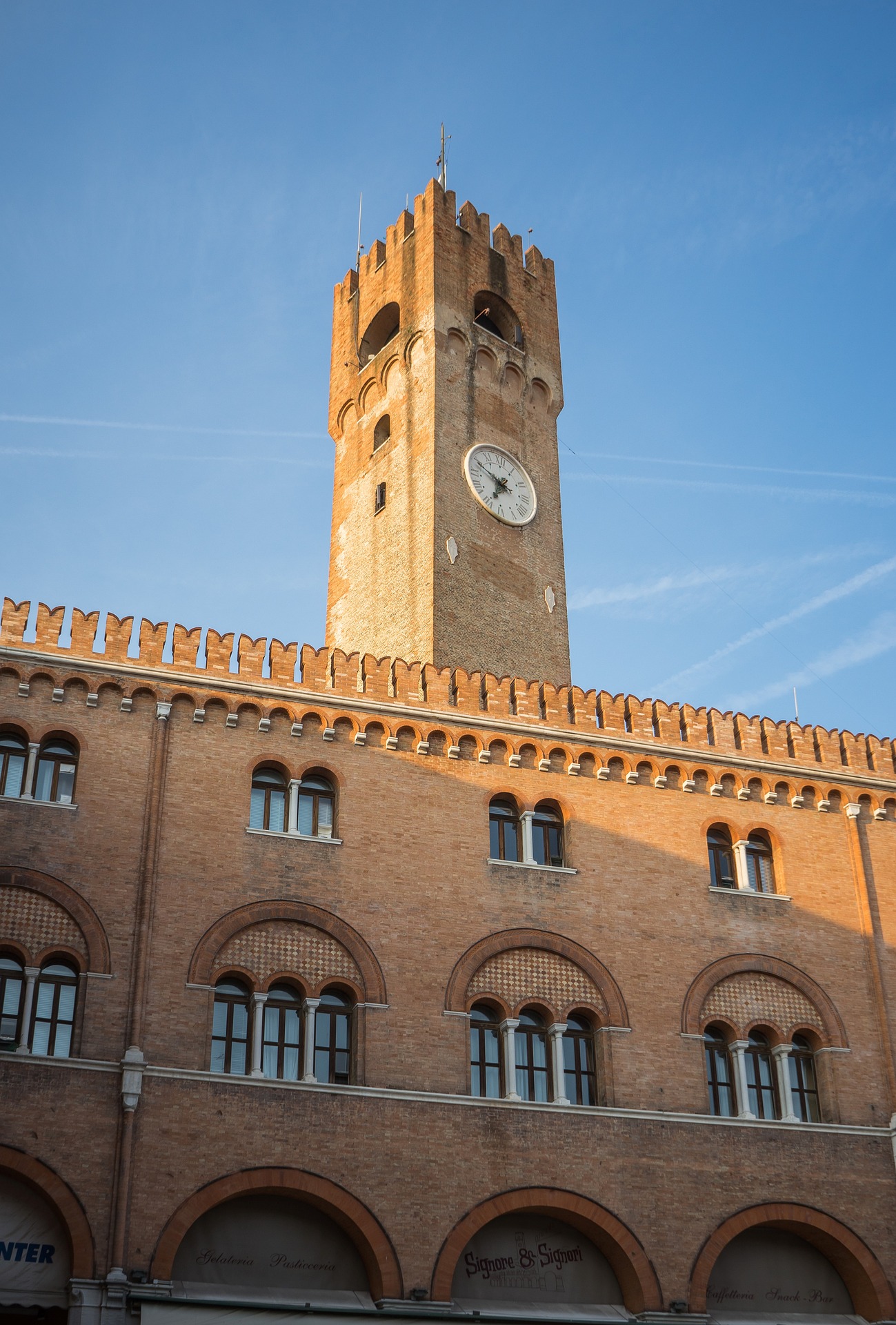
Festival citta’ impresa: when Treviso becomes business capital of notheast Italy
Every spring, for three days in late March, something happens to Treviso that the city’s normal rhythms do not prepare you for. The conference halls of the ex-convent of Santa Caterina and the civic rooms of Palazzo Rinaldi fill with economists, CEOs, foreign correspondents, and government advisors. The bars along the Via Calmaggiore, normally occupied at that hour by locals taking their afternoon coffee, are full of people talking in the clipped shorthand of people who have come a long way for a specific reason. The hotel rooms book out weeks in advance. La Tribuna di Treviso — the province’s daily newspaper, which on most March days leads with local politics, the asparagus harvest, and the fortunes of the provincial football clubs — runs columns by the Financial Times and Corriere della Sera.
This is Festival Città Impresa, the Festival of Industrial Territories — one of Italy’s most significant annual events for business, economics, and geopolitical analysis, and, to most international visitors, almost entirely unknown.
That combination — substantial importance, low international profile — is very Treviso. The city that built Benetton, De’Longhi, Geox, Diadora, and Pinarello in the same province, that hosts the European headquarters of companies whose brands you use without knowing where they come from, that produces more export value per square kilometre than most regions of Europe, has never been particularly interested in announcing itself. The business community of the Marca Trevigiana — the territory that has been called the most productive zone of manufacturing Europe since the 1970s — built its wealth through work rather than marketing. Festival Città Impresa is, in a sense, the exception that proves the rule: three days a year when the province turns outward, invites the national conversation to come to it, and says, with the quiet confidence of a territory that has earned the right: we know something worth discussing.
What Festival Città Impresa Is
Festival Città Impresa — formally Treviso Città Impresa: Festival dei Territori Industriali — is an annual three-day conference and public discussion festival organized by Gruppo NEM Nord Est Multimedia, the publishing group that produces Il Nord Est and La Tribuna di Treviso, Italy’s leading regional newspapers for northeast Italy. It is held in Treviso every spring and in Bergamo every autumn, with each city serving as the anchor of a discussion that the organizers conceive as specifically rooted in the Italian industrial territories — the territori produttivi — rather than in Rome or Milan.
The festival has been running since 2008. The Treviso edition launched in 2025 — the 2025 was the first edition held in the city rather than in Vicenza, where the festival had previously been hosted — and the 2026 edition confirms Treviso’s position as the spring venue. The choice of Treviso is not incidental. The province of Treviso is one of the most economically dense and industrially diverse territories in Italy: per capita value added in the province ranked seventeenth among Italy’s 107 provinces in 2023, above almost all other Veneto provinces except Padova and Verona, and consistently outperforming the national average. The festival belongs here because the questions it addresses — how Italian manufacturing competes globally, how industrial territories adapt to geopolitical disruption, how the relationship between small and medium enterprises and international supply chains is being remade — are not abstract questions in Treviso. They are what the people in the audience do for a living.
The 2026 Edition: “Costruire e Ricostruire”
The 2026 Treviso Città Impresa festival runs from March 27 to 29, with the Academy programme beginning a day earlier on March 26. The theme — Costruire e Ricostruire, Building and Rebuilding — is one of those formulations that sounds like a slogan until you understand what it is responding to.
The context is a moment of genuine structural disruption for Italian and European manufacturing: the redefinition of US-China-Europe trade relationships, the acceleration of industrial policy interventions by major governments on all sides, the technological transformation of production processes driven by artificial intelligence and automation, the energy transition’s implications for manufacturing cost structures, and the reconfiguration of global supply chains that the pandemic began and that successive geopolitical shocks have continued. For the companies of the Treviso province — operating in sectors from fashion to mechanical engineering, from aerospace components to food processing, from luxury goods to logistics — these are not remote macroeconomic variables. They are the conditions in which this week’s production decisions are being made.
“Costruire e Ricostruire” frames the conversation as a choice: Italian manufacturing can rebuild its competitive position in a changed global environment, can construct new industrial strategies and new supply chain relationships and new technological capabilities, or it can manage decline. The festival’s program does not pretend this is easy, but it is organized around the conviction — shared by the industrial communities of Treviso and Bergamo that anchor the event — that the answer is the former.
The program for the 2026 edition, presented at the beginning of March, brings together a roster of speakers that reflects both the national standing of the festival and the specific concerns of its host territory.
On geopolitics and global economics: Cecilia Sala, the journalist whose detention in Iran in late 2024 and early 2025 made her one of the most followed voices in Italian public life; Francesco Costa, director of Il Post, Italy’s most significant digital news organization and the publication that has done most to bring rigorous international journalism to Italian general audiences; Massimo Gaggi of Corriere della Sera, one of Italy’s most authoritative commentators on American politics and economics; Tonia Mastrobuoni, La Repubblica’s Berlin correspondent, on European economic dynamics; Michael Braun and Eric Jozsef on central European and French perspectives; Marco Varvello, the RAI correspondent from London.
On macroeconomics and European finance: Carlo Cottarelli, the economist and former IMF director who is the closest thing Italy has to a public intellectual on fiscal matters; Alessandro Giovannini of the European Central Bank; Paolo Guerrieri on international trade dynamics; Gian Paolo Manzella on industrial policy.
On technology and innovation: Alfonso Fuggetta of the Politecnico di Milano’s Department of Electronics, Information, and Bioengineering; Francesco Caio, founder of Caio Digital Partners; Stefano Bianchi of the European Space Agency; Marco Brancati of Telespazio-Gruppo Leonardo; Giovanni Dal Lago of Officina Stellare — the Treviso-province aerospace optics company whose instruments have been deployed on missions including the James Webb Space Telescope, and whose presence on the panel is itself a statement about what the Marca Trevigiana produces when it is operating at full capability.
On the business of business: CEOs and senior executives from companies including OVS (Stefano Beraldo), DHL Express Italy (Nazzarena Franco), Masi Agricola (Raffaele Boscaini), Umana (Raffaella Caprioglio), and Manpower (Anna Gionfriddo), alongside academic voices from Ca’ Foscari, the University of Padua, and Berkeley on industrial organization, geopolitics, and the sociology of work.
All events are free to attend, with registration required in advance at festivalcittaimpresa.it. The venue network for 2026 includes the ex-convent of Santa Caterina — the same building that houses the Musei Civici di Treviso and some of Tomaso da Modena’s most important frescoes, a venue that is extraordinary for a business festival and entirely characteristic of Treviso’s refusal to separate its intellectual from its cultural life — and additional spaces in the civic buildings of the historic centre. Registration opens before the festival’s formal launch and specific events fill quickly; booking as soon as registration opens is strongly recommended for the main plenary sessions.
Why This Festival Matters to Treviso Specifically
A visitor who arrives in Treviso during the festival weekend and does not know it is happening will notice the difference before they understand its cause. The city’s bars and restaurants have a different energy. The conversations at the tables around you are in Italian but not the Italian of the Veneto’s normal life — they carry the compressed urgency of people who have come from elsewhere and have three days to exchange everything they know. The hotels are full. The bookshop on the Via Calmaggiore has reorganized its window around economics titles.
What the visitor will be experiencing is something that Treviso has been, in one form or another, for most of its modern history: a provincial capital that punches significantly above its weight class because the economic density of its province creates a gravity of its own. The Marca Trevigiana — the traditional territorial designation for the Treviso province, carrying echoes of the medieval march territory it once was — is home to companies whose products you almost certainly own or use. Benetton built one of the most influential global fashion brands here. De’Longhi, whose coffee machines are in kitchens from Boston to Tokyo, has its headquarters ten kilometres from the Piazza dei Signori. Geox invented breathable footwear here. Pinarello has been building the bicycles on which Tour de France champions ride for decades. Diadora and Lotto — major sporting goods brands in the Italian and European market — were born here. Officina Stellare builds optical instruments for space missions from a facility in the province.
Behind these brand names is a deeper structure: the network of small and medium enterprises — many of them family-owned, many of them still managed by the families that founded them in the postwar economic expansion of the 1950s and 1960s — that form the actual productive base of the Treviso economy. These are the companies that make the components that go into other companies’ products, that supply the precision parts that the automotive industry, the aerospace sector, and the medical device industry require, that have built export markets in countries whose names would not appear on a standard map of Italian commercial relationships. It is this tissue of industrial activity — not spectacular, not particularly well known, but genuinely competent and genuinely productive — that Festival Città Impresa addresses when it talks about territori produttivi.
The festival’s organizers understand that the conversations that matter most for this territory happen not in Rome or Milan but here, where the people making the decisions live and work and send their children to school. Bringing the economists and the foreign correspondents and the European Central Bank analysts to Treviso rather than going to them is a statement about where economic reality is actually located in Italy, and about whose understanding of that reality is worth attending to.
The Academy Programme: Three Days in a Working Economy
One of the most distinctive elements of Festival Città Impresa is the Academy programme, which runs alongside the main festival and is aimed specifically at university and graduate students from Italian and international institutions. The Academy is, in the festival’s own description, a formative laboratory rather than simply an observer programme: participants attend the main festival sessions, have structured access to speakers for smaller-group discussions, and — in the expanded option — spend the day before the festival’s formal opening on guided visits to manufacturing companies in the Treviso province.
The company visit programme is worth noting in its own right. In previous editions, Academy participants have visited facilities including Pietro Fiorentini (precision engineering components for the energy sector), Zordan (high-end retail and exhibition fit-out for luxury brands), and Persico Group (composite materials manufacturing, including components for America’s Cup racing yachts and Formula 1 cars). These are not showroom visits. They are working production environments where the relationship between design, materials science, skilled labor, and global competitive positioning is visible in the machinery and the people operating it. For a student of economics, business, or industrial policy, an afternoon in one of these facilities generates the kind of intuitive understanding of how manufacturing actually works that no case study in a classroom can replicate.
The Academy option with company visits runs four days from March 26 to 29, with a participation fee of €360 covering accommodation and organization costs (travel to Treviso is at participants’ expense). The festival-only option runs three days at €260. Applications for the 2026 Academy were accepted through the festival’s website, with the first deadline in early March; additional spots may be available — check festivalcittaimpresa.it for current availability.
Visiting Treviso During Festival Città Impresa
For a visitor arriving in Treviso for the first time during Festival Città Impresa weekend, the collision of two Treviso realities — the medieval city of canals and frescoed facades and Saturday morning fish markets, and the economically sophisticated provincial capital that produces a disproportionate share of Italy’s export manufacturing — is one of the more instructive experiences the city offers.
The festival runs Friday through Sunday. The main venue at Santa Caterina operates from morning through early evening, with sessions typically running ninety minutes to two hours with brief intervals. The most high-profile sessions — the major keynote conversations with figures like Cecilia Sala or Carlo Cottarelli — are the ones that fill fastest. Register specifically for these as soon as the programme is published and registration opens; the general free-admission model does not guarantee entry without prior registration, and the most sought-after sessions have limited seating.
The rest of Treviso during festival weekend continues to operate on its own rhythms, which happen to be at their most appealing in late March. The Saturday Pescheria market on the fish island in the Cagnan canal is at the precise seasonal moment when the last radicchio Tardivo and the first white asparagus from the Piave plain are simultaneously on the same stalls — a culinary coincidence specific to a two-or-three-week window that only this season provides. The Sile restera in the early morning of a festival weekend, before the city fully wakes, has its March character: willow leaves beginning to open, kingfishers on the bank, herons in the shallows. The aperitivo at the Piazza dei Signori at six in the evening, if you have spent the day listening to an ECB economist and a RAI foreign correspondent debate the future of European manufacturing, has a quality that the aperitivo on any other March evening does not quite replicate: the wine is the same Prosecco, the square is the same Gothic rectangle of civic space it has been for eight centuries, but the conversation you bring to it is different.
Festival Città Impresa does not require you to choose between the city’s intellectual and sensory dimensions. It places them next to each other for three days and lets you move between them as the day allows. This is, again, very Treviso.
Practical Information for the 2026 Edition
The 2026 Treviso Città Impresa festival runs March 27–29, with the Academy programme beginning March 26. All public events are free with registration; the full programme is available and registration is open at festivalcittaimpresa.it. Main venues are in the historic centre of Treviso, within walking distance of all hotels inside the city walls. The ex-convent of Santa Caterina — the primary venue for flagship sessions — is approximately fifteen minutes on foot from Treviso Centrale train station and ten minutes from the Piazza dei Signori.
Accommodation in Treviso during festival weekend books out early. The festival’s own network of partner hotels includes the Hotel Maggior Consiglio and B&B Hotels in the city; book directly with these or through your preferred platform as soon as your dates are confirmed. Rooms available within the walled historic centre are limited; the city’s larger hotels are in the area between the station and the walls, all within fifteen minutes on foot of the main venues.
The closest international airport with significant transatlantic connections is Marco Polo in Venice, thirty kilometres from Treviso. Regional trains from Venice Santa Lucia to Treviso Centrale run approximately every twenty minutes and take thirty minutes. Treviso’s own Antonio Canova Airport, three kilometres from the historic centre, handles primarily Ryanair routes from the UK and northern Europe; from the airport, the MOM Line 6 bus connects directly to the city centre, and taxis and private transfers are available.
The festival’s own registration and programme updates are communicated through festivalcittaimpresa.it and the social channels of La Tribuna di Treviso and Il Nord Est. The programme for the 2026 edition was formally presented in early March, with session-by-session registration opening simultaneously.
Why Business Visitors Should Stay Longer Than the Festival
The visitors who attend Festival Città Impresa and leave on Sunday evening are missing something that the festival itself is partly an argument for: the territory that hosts it.
If you have spent three days listening to conversations about Italian manufacturing competitiveness, supply chain reconfiguration, and the future of the industrial districts of northeast Italy, and you have not yet driven thirty minutes north to see the UNESCO-listed Prosecco vineyards that the producers of Masi Agricola — one of the festival’s speaker companies — operate, or visited the hill town of Asolo where the Venetian Republic’s former queen of Cyprus built her court and Pietro Bembo wrote the dialogues that named the act of spending time pleasurably, or eaten the Sunday lunch that the restaurants of the Treviso province still serve at the pace and with the sequence that defines this territory’s relationship with food — then you have attended the conference about the territory without visiting the territory.
The argument Festival Città Impresa makes is that the industrial provinces of northeast Italy are worth taking seriously as a subject of economic and political analysis. The argument I make, as someone who has guided visitors through this territory for twenty years, is that they are worth taking seriously as a place to be — not just to understand abstractly but to experience in the morning, on the restera, before the fog lifts off the river.
📩 If you are visiting Treviso for Festival Città Impresa and would like to extend your stay into the province — the Prosecco hills, the manufacturing landscape of the Marca Trevigiana, the three-day itinerary that gives the city and its surroundings the time they deserve — I organize private guided visits throughout the spring season. Get in touch to plan your days around and beyond the festival.
Frequently Asked Questions
Is Festival Città Impresa conducted in Italian or in English?
The main festival sessions are conducted in Italian, with simultaneous translation provided for selected major events involving international speakers. The conference working language is Italian, which reflects the festival’s primary audience of Italian business professionals, journalists, policymakers, and students. For English-speaking visitors with conversational Italian, the sessions are fully accessible; for those without Italian, the most productive approach is to attend the sessions that feature English-speaking international guests (European institution representatives, international correspondents) where the bilingual exchange makes the content accessible regardless of language level. The Academy programme communicates in Italian and English; the International Academy application process is conducted in English, and international students are a specific target audience of the programme. If you are planning to attend as a non-Italian speaker, I can advise on which specific sessions of the 2026 programme are most accessible in English.
What makes this festival different from other Italian economics and business conferences?
Most Italian economics conferences are organized by financial institutions, government bodies, or think tanks and are aimed primarily at professional or academic audiences within specific sectors. Festival Città Impresa is organized by journalists, for a general public as well as specialist audience, around a specific territorial argument: that the industrial districts of northeast Italy — Treviso, Bergamo, the broader Veneto-Lombardy manufacturing corridor — represent an economic model and a social reality that national conversation has consistently undervalued, and that the questions most relevant to Italy’s economic future are best discussed where that economy actually operates rather than in Rome or Milan. The public admission model (free, with registration) is a deliberate choice: the festival is designed to be attended by people who make things, not just people who write about making things. The presence of the Academy programme for students adds a generational dimension that most equivalent events lack. And the venues — Gothic civic spaces, converted convents with Tomaso da Modena frescoes on the walls — put the conversation in an environment that reminds everyone in the room that industrial civilization is not a recent invention.
Is it worth visiting Treviso specifically during Festival Città Impresa, or is the festival a reason to avoid the weekend?
For visitors whose primary interest is in the city’s cultural and gastronomic life, the festival weekend is not a disruption but an addition. The city’s normal life continues alongside the festival; the Saturday market, the canal walks, the aperitivo at the Piazza dei Signori all happen on their usual schedule. What changes is the energy of the city: the bars and restaurants are busier and more varied, the conversations are more wide-ranging, and the quality of people-watching — if you are interested in the intersection of Italian business culture, journalism, and public intellectual life — is unusually high. For visitors whose interests extend to economics, business, or geopolitics, the festival offers access to some of Italy’s most interesting public voices in an intimate setting that a major conference center in Rome or Milan would not provide. The combination of attending a morning session with Carlo Cottarelli on European fiscal dynamics and spending the afternoon at the Pescheria market while the asparagus season opens is specific to Treviso in late March and to no other place or time. I would not avoid it. I would plan around it.
Igor Scomparin is a licensed Tour Guide and Tour Leader for the Veneto Region, certified Travel Agency Director, and founder of tourleadertreviso.com. He has been featured in Rick Steves’ travel guides to Italy and Europe since 2008.