Bird Watching on the Sile: Why Treviso Is One of Italy’s Most Surprising Wildlife Destinations
The first time I saw a kingfisher on the Sile, I was not looking for one.
I was leading a morning walk along the river path east of the city — the restera, the old towpath that runs along the water’s edge — with a group of guests who had come to Treviso for the medieval architecture and the Prosecco and had expressed no particular interest in wildlife. We were talking about the Venetian Republic’s management of the waterways when a movement in my peripheral vision stopped me mid-sentence. On a low branch projecting over the water, three metres from where we were standing, sat a Common Kingfisher — martin pescatore in Italian, a name that means precisely what it suggests — in full plumage: the back a deep iridescent blue-green, the breast and cheeks a vivid burnt orange, the whole bird barely larger than a sparrow, motionless in the way that kingfishers are motionless when they have identified a fish. We watched it for perhaps twenty seconds. Then it dropped from the branch in a straight vertical line, entered the water without a splash, and was gone.
Nobody in the group said anything for a moment. Then one of them said: “I had no idea that was here.”
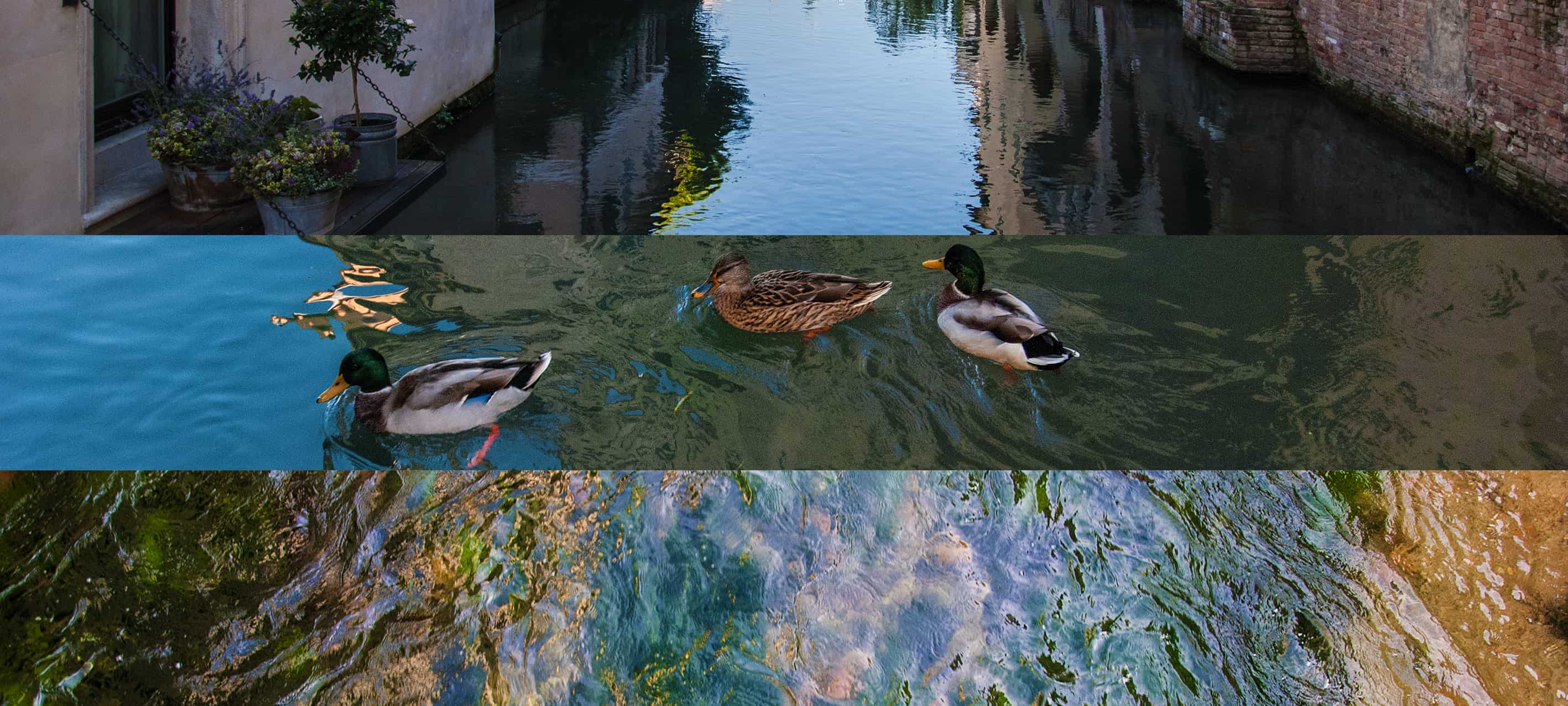
That sentence describes the standard relationship between Treviso’s visitors and the wildlife of the Sile River. Most people who come to this city have no idea that the river running through it — the same river whose canals carry the reflection of Gothic facades and whose banks host the Saturday fish market — is also one of the most significant river habitats in northeast Italy, a protected natural park that begins less than two kilometres from the historic centre and extends eighty kilometres toward the Adriatic coast, sheltering more than seventy nesting bird species and serving as a critical corridor for migratory waterfowl moving between central Europe and the Italian lagoon system.
I am Igor Scomparin. I am a licensed Tour Guide and Tour Leader for the Veneto Region, and I have been watching birds on the Sile for as long as I have been guiding in this territory. This article makes the case that any visitor to Treviso with any interest in natural environments — not necessarily a dedicated birdwatcher, not someone who carries binoculars and a field guide as a matter of course, simply someone who is curious about the living world — should set aside half a day for the Sile and its wildlife. What is here is genuinely extraordinary, genuinely accessible, and almost entirely unknown to the international visitors who pass through this city every year.
Why the Sile Is Different From Every Other River You Have Seen
To understand why the Sile produces the wildlife conditions that it does, you need to understand something about how this river is born, because the Sile is not born in the way that most rivers are born.
Most rivers begin in mountains. They start as snowmelt or rainfall on high terrain, gather into streams, descend through valleys, and by the time they reach the plain they are carrying silt, varying in temperature with the seasons, and supporting the kind of variable ecology that seasonal flooding and drought produce. The Sile is different. It is a resurgence river — one of the largest in Europe — which means that it does not come from mountains at all. Its source, between the municipalities of Casacorba di Vedelago and Torreselle di Piombino Dese in the western Treviso plain, is a collection of what the local dialect calls fontanazzi: small upwellings where groundwater that has filtered slowly through the deep gravel layers of the Venetian plain over decades — water originating as snowmelt in the Dolomites, percolating through the moraine deposits at the foot of the Alps, emerging here on the plain — rises to the surface in springs of extraordinary clarity and consistent temperature.
The water that feeds the Sile is cool in summer, relatively warm in winter, and maintains a year-round clarity and chemical consistency that is essentially impossible to find in a mountain-sourced river. This hydrological peculiarity has two direct consequences for wildlife. First, the aquatic vegetation of the Sile is extraordinarily rich — submerged plant communities, reed beds, alder and willow gallery forests along the banks — because the stable water conditions allow vegetation to establish itself in ways that the seasonal flooding of mountain rivers prevents. Second, the fish populations are abundant and diverse year-round, which in turn supports the predatory bird species — herons, egrets, kingfishers, grebes — that require reliable fish stocks to sustain breeding colonies. The Sile’s kingfishers are here because the fish are always here. The fish are always here because the water is always clear and always at the right temperature. The water is always clear because it came from the Dolomites thirty years ago and has been filtering through gravel ever since.
This is the ecological argument for why the Sile produces wildlife conditions that a mountain river of equivalent length cannot produce. It is also the argument for why the Parco Naturale Regionale del Fiume Sile — the regional natural park established to protect this corridor — exists and functions as effectively as it does. The park covers the river and its banks from the source area near Vedelago all the way to the coastal lagoon near Jesolo, passing through the city of Treviso along the way. The urban section of the park, where the Sile runs through and immediately around the historic centre, is the part that most visitors encounter without realising they are inside a protected natural area.
What You Will See: The Birds of the Sile
More than seventy species of birds nest along the Sile within the park boundaries. This is a number that deserves emphasis: seventy nesting species, meaning seventy species that breed here and raise young here, not merely species that pass through. The full list of species recorded in the park — nesting, migrating, and wintering — is substantially larger, running to well over one hundred and fifty.
The colony of herons is what draws ornithologists to the Sile most reliably. Three species of heron nest here in numbers significant enough that their colony was, from the time of the park’s establishment, one of the primary ornithological justifications for protection. The Grey Heron — Airone cenerino — is the largest and most visible, standing motionless in the shallows on legs that seem too thin for its body, waiting with the infinite patience of a creature that has been doing this for millions of years. The Little Egret — Garzetta — is smaller and entirely white, with the characteristic yellow feet and black legs that make it unmistakable even at distance. The Black-crowned Night Heron — Nitticora — is the most secretive of the three, roosting in the canopy during the day and becoming active at dusk, its presence often detected first by the characteristic harsh call that sounds improbable for a bird of its size. More recently the Cattle Egret has begun establishing itself in the Veneto, and individuals now appear along the Sile with increasing frequency.
The kingfisher deserves its own paragraph because it is, in my experience, the bird that produces the strongest reaction in visitors who have not specifically come to watch birds. The Common Kingfisher is not common in the sense of being ordinary. It is common in the technical sense — not rare, not endangered, present in reasonable numbers along suitable river habitats across Europe — but its appearance is so improbable, so extravagantly coloured for a northern European bird, that the first encounter with one invariably produces a response that I can only describe as gratitude. The Sile’s kingfisher population is healthy, and the birds are visible year-round, perching on low branches over the water or flying low and fast along the river channel in the characteristic straight-line flight that makes them identifiable at a glance even before the colour registers.
The Little Grebe — Tuffetto — is one of the nesting specialities of the Sile’s broader water bodies. This small diving duck — barely the size of a large chicken — has a habit of vanishing beneath the surface and reappearing at an entirely unexpected location, which makes watching it an exercise in managed anticipation that experienced birders find deeply satisfying. The Great Crested Grebe — Svasso maggiore — is larger and more dramatic, with the elaborate head plumes that give it its name and the extraordinary courtship display, carried out face-to-face on the water’s surface, that ranks among the most spectacular behaviours visible to anyone patient enough to be at the lake basins near Quinto di Treviso in early spring.
The Tufted Duck — Moretta — deserves particular mention because it is genuinely rare as a nesting species in Italy. While large numbers winter at the Sile’s lake basins — the artificial basins created by gravel extraction in the 1950s near Quinto di Treviso, now among the most productive freshwater bird habitats in the Veneto — some individuals remain to breed, which represents a significant record for a species that normally nests much further north. In autumn and winter these same basins attract concentrations of diving ducks that are remarkable by any European standard: Tufted Duck, Greater Scaup, Ferruginous Duck, Wigeon, Teal, Mallard, Pochard, and occasionally northern gulls including Common Gull and Herring Gull joining the resident Yellow-legged Gull flocks in numbers that reward a morning of patient observation.
The reed bed specialists are perhaps the most challenging group for visitors without binoculars and field experience, but they are among the most ecologically interesting: the Water Rail — Porciglione — heard far more often than seen, calling from deep in the reed beds with the sound of a squealing pig; the Little Bittern — Tarabusino — tiny, secretive, with a booming call in the breeding season that carries hundreds of metres through the vegetation; the Great Reed Warbler — Cannareccione — singing from the tops of reed stems with an extraordinary persistence and volume; the Eurasian Penduline Tit — Pendolino — building its remarkable woven nest suspended from willow branches over the water. These are not birds you are likely to encounter on a casual stroll. They are the reason experienced ornithologists come to the Sile specifically, and they are why a guided visit with someone who knows the habitats produces a different experience from a self-guided exploration.
The raptors deserve mention: Sparrowhawk nests in the riparian woodland, hunting through the corridors between the alder and willow stands; Common Buzzard ranges over the agricultural land adjacent to the park; Marsh Harrier — Falco di palude — quarters the reed beds in slow, low flight, particularly visible during migration; Barn Owl — Barbagianni — hunts the grassland edges of the park at night, and individual birds are sometimes active in the late afternoon light at the forest margins in winter.
The Oasi di Cervara: The Best Entry Point
For a visitor to Treviso who wants a structured introduction to the Sile’s wildlife — who wants interpretive material, guided access, a designed observation infrastructure — the Oasi di Cervara at Santa Cristina di Quinto di Treviso is the right starting point.
The Oasi di Cervara is a twenty-five hectare wetland reserve approximately ten kilometres from Treviso’s historic centre, at the edge of the municipality of Quinto di Treviso along the Strada Provinciale 17 toward Badoere di Morgano. It sits within the Natura 2000 network as both a Site of Community Importance and a Special Protection Zone — European Union designations that carry specific legal obligations for habitat and species protection — which gives it a formal conservation status that reinforces the work the park has done since the Oasi came into public ownership in 1984.
At the centre of the reserve stands a functioning medieval water mill — the Mulino di Cervara — which was a working mill until the early twentieth century, fell into disuse and decay, was purchased by the Municipality of Quinto di Treviso in 1984, and restored to working condition in 1992. The restoration was careful: the frescoes inside the mill were preserved, the wooden machinery was reconstructed, and the two millstones — one stone-ground, one roller-type — were reinstalled and made operational, though now for educational demonstration rather than commercial milling. The mill structure anchors the Oasi’s visitor experience and gives it the historical dimension that makes it interesting even for visitors who come primarily for the architecture of the Treviso hinterland rather than for birds.
The bird-watching infrastructure within the Oasi is serious and well-maintained. Four concealed hides — capannine — are positioned at key observation points within the vegetation, bookable in advance, offering views over the wetland areas and reed beds where the most sensitive species concentrate. The stork aviary is a notable feature: the Oasi has been a centre for a white stork reintroduction programme since 2009, and storks nest visibly within the reserve, providing the kind of close-range observation of a large charismatic species that is normally impossible outside a zoo context. In the breeding season, from February through June, the heron colony in the alder trees — grey herons, little egrets, night herons nesting together in the same stand of trees — is audible from a considerable distance and visible from the observation points within the reserve.
The species list at Cervara that visitors have a reasonable expectation of seeing on any open day includes: White Stork, Grey Heron, Little Egret, Great White Egret, Cormorant, Mute Swan, Mallard, Teal, Common Moorhen, Eurasian Coot, Little Grebe, Common Kingfisher, Water Rail, various woodpecker species, Barn Owl, Tawny Owl, and Little Owl — the last three available in the dedicated owl encounter sessions on Saturday afternoons, where the naturalist guides bring the birds out for close-range observation and the opportunity to feed them from your hand, an experience that is genuinely remarkable and that I have seen reduce adults to the same expression of delighted surprise as their children.
The Oasi is generally open on Saturdays, Sundays, and public holidays, with guided tour sessions on weekend afternoons. Entrance is by a modest admission fee. The reserve is managed by a small social cooperative — Alcedo Cooperativa Sociale — whose naturalist guides are genuinely expert and whose enthusiasm for the place and its wildlife is evident. Booking a guided visit rather than arriving for free exploration produces a substantially better experience, both in terms of what you see and in terms of understanding what you are seeing.
Getting there from Treviso: ten kilometres by car following the SS515 toward Padua as far as Quinto di Treviso, then right onto the Strada Provinciale 17 toward Santa Cristina and Morgano. The entrance to the Oasi is on the right, clearly marked, with a car park.
The Sile Within the City: What You See Without Going Anywhere
One of the things I most appreciate about the Sile’s wildlife, and that I want to communicate to visitors who are not prepared to make a dedicated trip to the Oasi or the lake basins, is that a significant portion of it is visible from within Treviso itself without any special equipment, planning, or advance booking.
The canals that run through the historic centre — the Cagnan Grande, the Buranelli, the Roggia — are fed by the Sile system and carry its characteristic clear spring water through the city. Grey Herons stand in these urban canals regularly, fishing with complete indifference to the cafes and pedestrians around them. Kingfishers use the canal banks as hunting perches, occasionally visible from bridges in the early morning before the city becomes noisy. Mallards nest along the canal margins and parade their ducklings through the water below the Pescheria island in spring with a confidence that suggests they have been here rather longer than the tourists photographing them.
The river path — the restera — that runs along the Sile from the edge of the historic centre eastward toward Casale sul Sile is where the morning walk I described at the beginning of this article takes place, and it is accessible to any visitor staying in Treviso who is willing to leave the hotel at seven in the morning. The path follows the old towpath, shaded by large willows and poplars, with the river on one side and agricultural land on the other. In spring, Common Nightingales sing from the thickets along the bank — loudly and continuously, in the way that nightingales sing when they are competing for territory, the full repertoire of phrases and phrases and counterpoint that gives this bird its specific gravity in the European imagination. In summer, Common Swifts scream overhead and Sand Martins course along the water surface. In autumn, migrating warblers pass through the willows in waves on mornings of northerly wind.
The lake basins at Quinto di Treviso — the Lago Superiore and Lago Inferiore — are approximately six kilometres from the city centre and represent the most productive single location for waterbird observation in the park, particularly in autumn and winter when northern European diving ducks arrive in significant numbers. These basins are large, open water, with public footpaths along the banks that give clear views across the water. No admission fee, no booking required. Bring binoculars.
When to Go: Seasonal Rhythms on the Sile
The Sile rewards visits in every season, but the character of what you find changes substantially through the year, and knowing this allows you to calibrate expectations appropriately.
Spring — March through May — is the peak of biological activity. The heron colony is at its most dramatic from February through April, when the birds are establishing nest sites, displaying, and beginning to incubate. Kingfishers are pairing and excavating nest burrows in the river banks. Little Grebes and Great Crested Grebes are in full courtship display on the open water. Migrating birds moving north through Italy use the Sile corridor as a navigation reference, and spring mornings after southerly winds bring waves of warblers, flycatchers, hirundines, and occasional rarities through the riparian vegetation. This is also, of course, the season that coincides with asparagus season in the surrounding countryside, which means a morning on the Sile followed by an asparagus lunch at a local osteria is one of the most complete expressions of what this territory offers in the spring months.
Summer — June through August — is the period of maximum vegetation density, which makes observation more challenging but also brings the reed bed specialists into full vocal activity. The breeding colony is fledging young, and juvenile herons and egrets disperse along the river in July and August, giving opportunities for close-range observation that the adults’ wariness prevents. Boat excursions on the Sile — by traditional flat-bottomed barca a pertica, the punt-like river boats that were once the primary transport on this waterway — are available through the Oasi di Cervara and give access to sections of the river corridor not visible from the banks.
Autumn — September through November — brings the migrating waterfowl. The lake basins at Quinto begin to fill with diving ducks from October onward, and the concentrations on good days are impressive. Marsh Harriers move through in numbers, quartering the reed beds in the morning light. Waders appear at the muddy margins of the basins on passage. The vegetation has begun to thin, which paradoxically makes observation easier than in summer.
Winter — December through February — is the season that most visitors to Treviso do not associate with wildlife at all, and the one that most consistently surprises guests who accompany me to the river. The bare willows along the bank reveal nest structures invisible in leaf. The waterfowl concentrations on the lake basins are at their peak. Kingfishers, if anything, are more visible in winter because the low vegetation gives fewer concealment options. Grey Herons stand along the canal edges in the city with particular stoicism. And the Sile’s spring-fed water, unchanged in temperature and clarity from what it was in June, continues to support the fish populations that the birds depend on — which is the whole point of this river, in winter as in any other season.
Combining Wildlife and Culture: The Full Sile Day
The Parco Naturale Regionale del Fiume Sile is not only a wildlife corridor. It is also a cultural landscape, and the two dimensions reinforce each other in ways that make a full day on the Sile one of the most complete experiences available in the Treviso province.
Dante Alighieri mentioned the Sile in the Divine Comedy — in Canto IX of the Paradiso, where Cunizza da Romano speaks of the territory between the Sile and the Cagnano. Petrarch knew this river. The nineteenth-century writer and cultural activist Giuseppe Mazzotti, one of the most important voices in Treviso’s modern civic identity, wrote about the Sile with a passion that was simultaneously naturalistic and literary. The river has been culturally resonant in this territory for seven hundred years, which means that watching birds on it is not an interruption of the cultural itinerary of a Treviso visit but a continuation of it.
The working water mills along the river — restored examples at Cervara and in several other locations within the park — are reminders that the Sile’s constant and predictable flow was the economic engine of this territory for centuries: grinding grain, powering weaving operations, draining the flat land between the river and the lagoon. The traditional flat-bottomed boats that once carried goods along the river are still used for leisure and educational excursions. The alzaie — the towpaths along which horses pulled the boats upstream — have been converted to cycling and walking paths that now form part of the GiraSile, the park’s cycling itinerary connecting Treviso to the Adriatic coast.
A day that begins with a morning on the Sile restera east of the city, continues to the Oasi di Cervara for a guided visit and lunch at the small refreshment facility within the reserve, and ends with an afternoon in the asparagus villages or the Prosecco hills gives you the full range of what this territory offers — the natural, the agricultural, and the enological — within a single coherent day. I organize private guided days on exactly this structure for guests who want to understand the Sile province as a whole rather than as a collection of separate attractions.
📩 The Sile’s wildlife is one of the most consistently surprising elements of any well-planned Treviso visit — and one of the hardest to access without local knowledge of where and when to look. I organize private morning walks along the river and half-day excursions to the Oasi di Cervara and the lake basins, tailored to whatever level of ornithological experience my guests bring. Get in touch to arrange a date.
Frequently Asked Questions
Do I need binoculars and specialist equipment to enjoy birdwatching on the Sile?
For a casual visit to the Sile restera or the Oasi di Cervara, binoculars are not strictly necessary but transform the experience significantly. The Oasi di Cervara’s observation hides are positioned close enough to the main wildlife areas that many species — herons, egrets, storks, ducks, kingfishers — are visible to the naked eye. The heron colony in the alder trees is large enough that the birds’ presence is audible and visible without optical aids. However, for the more secretive species — water rails in the reed beds, warblers in the willows, the subtler diving ducks on the open water basins — binoculars of even modest quality make the difference between frustration and satisfaction. If you do not travel with binoculars, I carry a spare pair on guided excursions and can lend them to guests during our time together.
How close is the Parco Naturale del Sile to Treviso’s historic centre, and can it be visited as part of a city day?
The park begins immediately adjacent to the historic centre — the Sile flows through the city itself, and the protected riverside habitat starts within two kilometres of the Piazza dei Signori. The restera walk east of the city along the river is accessible from the centro storico in minutes and gives genuine wildlife encounters — kingfishers, herons, moorhens, warblers — without requiring a car or any advance planning. For the Oasi di Cervara specifically, which is the most structured and species-rich location within the park, the drive from Treviso’s historic centre is approximately twenty minutes. A half-day combining a morning river walk and an afternoon visit to the Oasi is entirely achievable as part of a broader Treviso itinerary, and I would argue that the combination of the city’s medieval culture in the morning and the Sile’s wildlife in the afternoon represents one of the most distinctive and least imitated experiences available in northeast Italy.
What is the best time of year to visit for birdwatching on the Sile, and are there species that only appear in specific seasons?
The Sile rewards visits in every season, but spring — particularly late March through May — is when the largest number of species are simultaneously active, most visible, and most behaviourally interesting, with courtship displays, nest building, and the beginning of breeding activity all occurring together. The heron and egret colony is most spectacular in February through April. The late-season migrant warblers and flycatchers are at their most numerous in April and May. Autumn — October and November — brings the best concentrations of wintering waterfowl on the lake basins at Quinto di Treviso. The Tufted Duck, which is a genuinely rare nesting species in Italy, is present year-round but easiest to observe in autumn when the arriving winter birds augment the resident population. For visitors combining birdwatching with the cultural and gastronomic calendar of the Treviso province, late March through May aligns perfectly with asparagus season and with the best weather of the Treviso spring, making this period the most complete time to visit if you can choose your dates.
Igor Scomparin is a licensed Tour Guide and Tour Leader for the Veneto Region, certified Travel Agency Director, and founder of tourleadertreviso.com. He has been featured in Rick Steves’ travel guides to Italy and Europe since 2008.