The Last Radicchio: How Treviso Celebrates the End of Its Most Famous Season
The Last Radicchio: How Treviso Celebrates the End of Its Most Famous Season
There is something quietly melancholic about the last days of the Radicchio Rosso Tardivo di Treviso season.
By early March, the crates are getting lighter at the market. The vendors who have been selling this extraordinary vegetable since November speak about it the way farmers everywhere speak about the end of harvest — with a mixture of exhaustion, pride, and genuine sadness. Another season, almost gone. Another year before it comes back.
I am Igor Scomparin, a licensed local guide born and raised in the Veneto. I have walked these markets every winter of my life. And every year, without fail, the last weeks of radicchio season remind me why I chose to spend my career showing people this corner of Italy. Because what happens in Treviso in late winter — around a bitter, beautiful, deeply local vegetable — is one of the most authentic food experiences left in the whole country.
What Radicchio Rosso Tardivo Actually Is
Before we talk about the celebration, it helps to understand what makes this vegetable so extraordinary that an entire city builds a season around it.
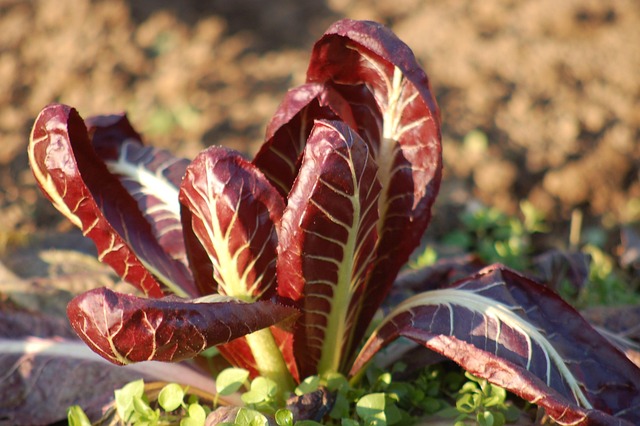
The Radicchio Rosso Tardivo di Treviso IGP is not the round, cabbage-like radicchio you find in salad bags at American supermarkets. It is something entirely different. Long, slender, with deep burgundy leaves and firm white ribs, it looks almost like a flower that has not yet decided whether to open. The leaves curl inward, tender at the tips, crunchy at the base, with a bitterness that is sharp but never unpleasant — the kind of bitterness that makes your mouth water rather than recoil.
It grows only here. In the flatlands between Treviso, Castelfranco Veneto, and Chioggia, in specific soil conditions that cannot be replicated elsewhere. The farmers harvest the roots in late autumn, then transfer them to tanks of cold, clean spring water — a process called forzatura, or forcing — where they remain for several weeks, blanching in the dark until the leaves lose their chlorophyll and develop that characteristic deep red color and refined flavour.
The result is one of the most labour-intensive vegetables in Italian agriculture. And one of the most expensive, and one of the most worth it.
I wrote a full piece on why this vegetable deserves your attention — start there if you want the complete story before you visit. (link on “why this vegetable deserves your attention”: https://www.tourleadertreviso.com/radicchio-di-treviso-why-this-bitter-vegetable-is-worth-loving/)
The Season and Why the Ending Matters
The Radicchio Rosso Tardivo season runs from late November through early March. It is, by definition, a winter product — born in the cold, refined in cold water, at its best when the temperatures outside are low enough to keep it firm and sweet-bitter rather than limp and sharp.
By February the season is at its peak. The restaurants of Treviso are featuring it on every menu. The markets are full of it. (link on “markets”: https://www.tourleadertreviso.com/how-to-navigate-trevisos-markets-like-a-pro/)
And then, almost suddenly, it is March. The temperatures begin to rise. The forcing process becomes less reliable. The last crates arrive at the Pescheria and the surrounding market stalls, and the vendors know — this is it for another year. (link on “Pescheria”: https://www.tourleadertreviso.com/trevisos-fish-market-a-morning-ritual-since-1856/)
That ending is worth being present for. Not because it is dramatic — Italians do not make a fuss — but because of the quiet intensity it carries. The last radicchio of the season, grilled simply with olive oil and salt, tastes different when you know it will be another eight months before you can have it again.
How Treviso Celebrates: Fiori d’Inverno
The city does not let the season close without a proper farewell.
In early March, the event known as Fiori d’Inverno — Flowers of Winter — takes over the centre of Treviso with a dedicated celebration of the Radicchio Rosso Tardivo IGP. The name is perfect. Because that is exactly what this vegetable looks like when it is at its best: a dark red flower, curling at the edges, caught somewhere between opening and closing.
The event brings together local producers, chefs, and the general public in what is essentially a love letter to a vegetable. There is a show cooking area where local chefs demonstrate techniques — grilling, braising, raw preparations, risotto, pasta — that reveal the full range of what the radicchio can do in the hands of someone who has been cooking with it their whole life. There are market stalls where you can buy directly from the farmers who grew it, still cold from the forcing tanks. There are tastings paired with the wines of the territory — inevitably, a glass of Prosecco to cut through the bitterness. (link on “a glass of Prosecco”: https://www.tourleadertreviso.com/the-locals-guide-to-prosecco-road-beyond-conegliano-and-valdobbiadene/)
And there is the atmosphere that only a genuinely local Italian food event carries — not a tourist fair, not a staged performance, but a community gathering around something it genuinely loves.
What the Restaurants Do With the Last of It
The real celebration, though, happens quietly, in the kitchens of Treviso’s osterie and trattorias.
Every chef in the city knows when the season is ending. And in those final weeks of February and early March, menus shift subtly but noticeably — the radicchio appears in more dishes, prepared in more ways, as if the chefs are trying to say everything they have left to say about it before it disappears for another year.
You will find it grilled over open flame with nothing but a drizzle of good olive oil — the purist’s choice, the preparation that lets the vegetable speak for itself. You will find it raw in salads dressed with lemon and anchovies, or folded into a risotto where the bitterness dissolves into the butter and Parmigiano to become something altogether more complex and warming. (link on “risotto”: https://www.tourleadertreviso.com/how-to-eat-like-a-local-in-treviso-a-day-of-food/)
You will find it wrapped around scallops or shrimp, braised slowly with red wine until it collapses into a dark, sweet-bitter sauce, or tucked into a pasta with taleggio — the creamy local cheese that softens every sharp edge and turns the whole dish into something that makes you close your eyes.
The best place to experience this is not a restaurant with a tasting menu and a Michelin star. It is one of Treviso’s traditional bacari and osterie, where the menu is written on a chalkboard and changes every day depending on what the market offered that morning. (link on “bacari and osterie”: https://www.tourleadertreviso.com/the-ultimate-guide-to-trevisos-osterie-and-bacari/)
The Radicchio and the Aperitivo
One of the great pleasures of radicchio season is how naturally it integrates into Treviso’s aperitivo culture. (link on “aperitivo culture”: https://www.tourleadertreviso.com/the-art-of-the-italian-aperitivo-lessons-from-treviso/)
The cicchetti — the small bites served alongside a glass of wine or spritz at the city’s bacari — take on a seasonal character in winter. (link on “spritz”: https://www.tourleadertreviso.com/where-to-find-the-best-spritz-in-treviso-according-to-a-local/)
A piece of grilled radicchio on a slice of polenta. A small bruschetta with radicchio and creamy gorgonzola. A little pastry shell filled with radicchio and ricotta. These are the cicchetti of late winter in Treviso — humble, seasonal, made from what is available right now, and completely delicious.
Standing at the bar of a bacaro in the first week of March, with a spritz in one hand and a piece of radicchio polenta in the other, watching the last light of the afternoon come through the windows onto the canal outside — this is one of those travel moments that no guidebook can fully prepare you for. You just have to be there.
Why the End of the Season Is the Best Time to Arrive
There is a counterintuitive logic to visiting Treviso at the very end of radicchio season rather than at the beginning.
At the beginning — November, December — the city is still in autumn mode. The season feels long and unhurried. At the end, in February and March, there is an urgency to it. The chefs are more creative because they are working with what is left. The producers are more generous with their time because the pressure of the main harvest is behind them. The market vendors will talk to you in a way they simply do not have time to in December.
And the city itself, in early March, is beginning to shake off winter. The first signs of spring are appearing — the first asparagus shoots at the edges of the markets, the first outdoor tables at the cafés, the first evenings warm enough to walk along the Sile without a coat. (link on “Sile”: https://www.tourleadertreviso.com/the-sile-river-trevisos-natural-treasure/)
You are catching two seasons at once. The last of winter’s finest, and the very first whisper of spring.
What to Do: A Radicchio Morning in Treviso
Here is how I would spend a radicchio morning in Treviso in early March, if I were designing it for a guest.
Begin at the Pescheria before 8am. (link on “Pescheria”: https://www.tourleadertreviso.com/trevisos-fish-market-a-morning-ritual-since-1856/)
The fish market operates on the small island in the middle of the canal, and surrounding it are the stalls of the fruit and vegetable vendors. This is where the radicchio appears at its finest — straight from the producer, still cold, the leaves tight and glossy. Buy some if you have a kitchen. Watch how the locals choose it, turning each head in their hands, checking the ribs for firmness.
Then walk to one of the bars near the Piazza dei Signori for a coffee. A proper Italian coffee — standing at the bar, drunk in two minutes, followed by a glass of water. Then, if the timing is right, make your way to the show cooking at Fiori d’Inverno and watch a local chef do something extraordinary with what you just saw in its raw state at the market.
Lunch at one of the trattorias in the historic centre, where the day’s special will almost certainly feature radicchio in some form. (link on “trattorias”: https://www.tourleadertreviso.com/the-ultimate-guide-to-trevisos-osterie-and-bacari/)
And then, in the late afternoon, an aperitivo — a spritz and a plate of cicchetti — at a bacaro along the canal. The perfect ending to a morning built around one extraordinary vegetable. (link on “aperitivo”: https://www.tourleadertreviso.com/the-art-of-the-italian-aperitivo-lessons-from-treviso/)
Come Before It Is Gone
The Radicchio Rosso Tardivo di Treviso IGP season ends in early March. There is no negotiating with the calendar — when the temperatures rise, the season is over, and no amount of wishing will bring it back until November.
If you are reading this in February or the very first days of March, you still have time. Come now. Eat it grilled, eat it raw, eat it in a risotto, eat it as a cicchetto at a bacaro with a glass of Prosecco in your hand. Walk the markets in the morning while the crates are still full. (link on “markets”: https://www.tourleadertreviso.com/how-to-navigate-trevisos-markets-like-a-pro/)
And if you want to experience all of this properly — with a licensed local guide who knows which vendor to visit, which osteria to book, and exactly how to make a morning in Treviso feel like the best decision you have ever made — I am here.
📩 Get in touch and let’s plan your visit before the season closes.
Igor Scomparin is a licensed Tour Guide and Tour Leader for the Veneto Region, certified Travel Agency Director, and founder of tourleadertreviso.com. He has been featured in Rick Steves’ travel guides to Italy and Europe since 2008.