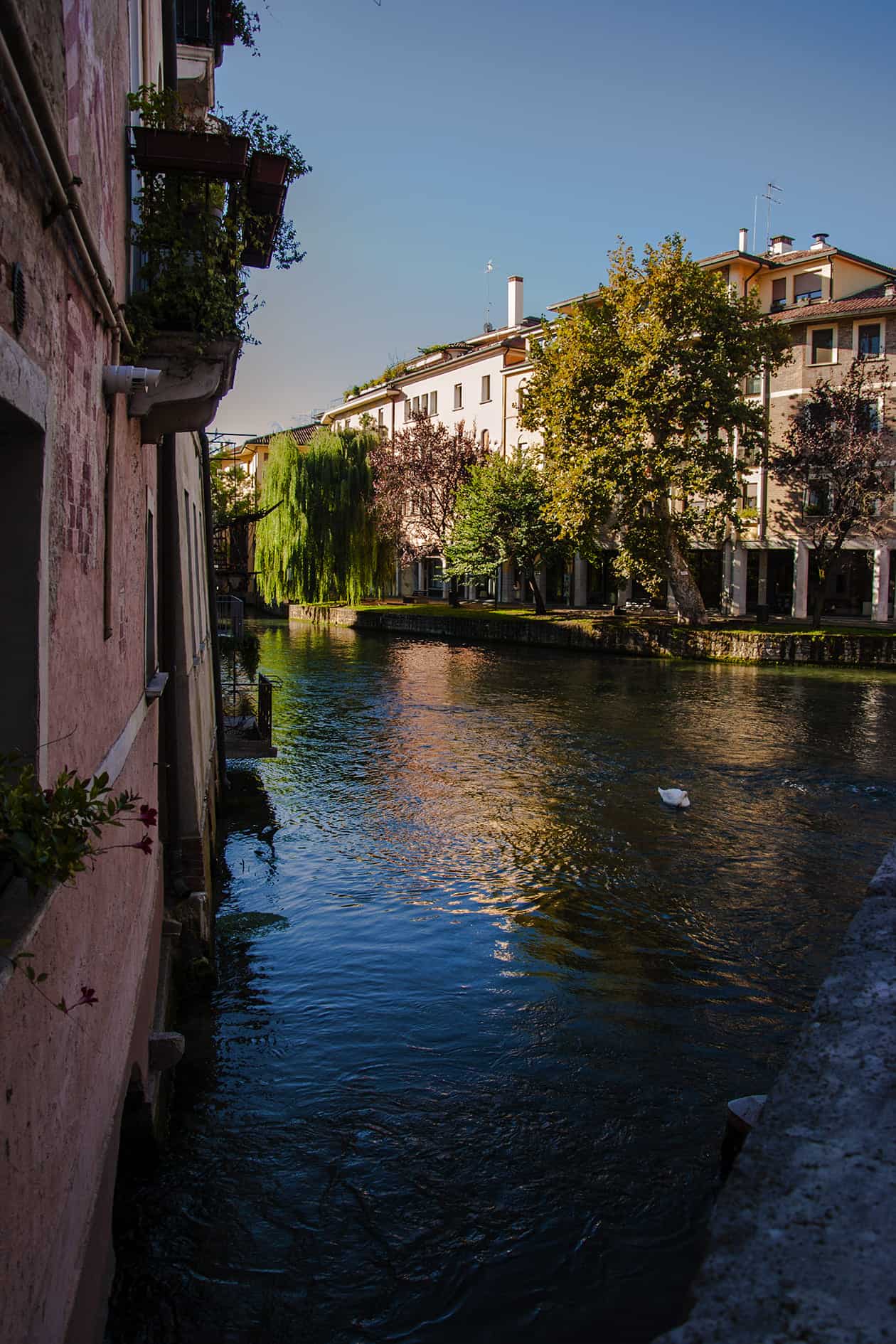
A Complete 3-Day Treviso Itinerary: The Perfect Long Weekend in the Veneto Countryside
Good. I have everything I need. This article should be the definitive flagship piece — comprehensive, Igor’s voice throughout, all three days fully built with specific times/pacing, deep cross-linking to every relevant article on the site, strong seasonal texture, and a practical layer (getting there, where to stay, what to pack) that a first-time American visitor needs. Let me write it now.
A Complete 3-Day Treviso Itinerary: The Perfect Long Weekend in the Veneto Countryside
Most people come to the Veneto to see Venice. A smaller number come specifically to see the Prosecco hills, or the Dolomites, or the Palladian villas scattered across the plain between Padua and Vicenza. Almost nobody, in my experience, plans a long weekend in Treviso as the primary destination of a trip to northeast Italy.
Almost nobody. But the ones who do — who arrive with three days and no plan to leave until the third evening — are the visitors I hear from afterward, months later, asking how to come back.
Treviso is not a city that performs for tourists. It does not have the operatic self-presentation of Venice, the Renaissance grandeur of Florence, the monumental density of Rome. What it has is something rarer and, for certain kinds of traveler, more satisfying: a complete, functioning, beautiful Italian city that has been doing what Italian cities do — market on Saturday morning, aperitivo at six, Sunday lunch that lasts until four — without interruption and without particular concern for whether anyone outside the province is watching. The Gothic streets are frescoed and ancient and genuinely lived in. The canals carry real water from the Sile’s springs and have herons fishing in them in the early morning. The Prosecco comes from hills you can see from the city walls on a clear day.
Three days in Treviso is enough time to understand this city, to begin to love it, and to identify the specific things you will want to come back for. This itinerary is built from twenty years of living and working in this territory as a licensed Tour Guide and Tour Leader for the Veneto Region. It is not a checklist of monuments. It is a sequence of days designed to give you the experience of being here, not merely the experience of having been here.
A note on timing before we begin: this itinerary works in every season, but the seasonal notes throughout will help you calibrate expectations and take advantage of what is specific to the moment you are visiting. The best single season for a first visit to Treviso is late March through May — the spring equinox period and the weeks that follow — when the light is extraordinary, the asparagus is at market, the birds are singing on the Sile, and the crowds are still a month from arriving. But Treviso in December, with the radicchio on every table and the fog in the streets at seven in the morning, has its own quality that I would not trade.
Getting Here: The Practical Foundation
Treviso is served by its own international airport — Antonio Canova Airport, TSF — which handles primarily Ryanair flights from the United Kingdom, northern Europe, and select European cities. The airport is three to four kilometres from the historic centre; the MOM Line 6 bus runs directly to Treviso Centrale station every twenty minutes on weekdays and Saturdays, and the journey takes approximately ten minutes. A taxi from the rank outside arrivals costs €10–15 and takes eight minutes. If you are arriving late at night, a pre-booked private transfer with a driver is the most reliable option.
If you are flying into Marco Polo Airport in Venice — which handles most intercontinental and transatlantic routes — Treviso is thirty kilometres away. The most efficient connection is the ATVO or Barzi coach service from the airport to Mestre, followed by a regional train to Treviso Centrale (the total journey runs forty-five to sixty minutes), or a direct private transfer from the airport to your Treviso hotel. The regional train from Venice Santa Lucia to Treviso Centrale runs approximately every twenty to thirty minutes and takes thirty minutes — meaning that Treviso is as convenient a base for a Venice day trip as the reverse.
From Treviso Centrale to the historic centre is a ten-minute walk across the river and through the Porta Altinia gate.
Where to Stay
Treviso’s accommodation is concentrated in and around the historic centre, and for this itinerary you want to be inside the walls — ideally within ten minutes on foot of the Piazza dei Signori. The walled city is compact enough that everything described in Days One and Two is walkable from any hotel in the centro storico.
The city has no large international chain hotels inside the walls, which is one of its virtues. The accommodation options range from family-run three-star hotels in converted historic buildings to boutique properties with more considered design. Avoid the hotels in the industrial zone north of the train station; they are cheaper but remove you from the experience the city offers.
Book accommodation in advance for weekends between April and October. Treviso fills on weekends more than most visitors expect, particularly when there are events at the Fiera di Treviso or local festivals in the province.
DAY ONE: The Heart of the City
Morning: The Piazza, the Gothic Streets, the First Orientation
Begin the way every day in Treviso should begin: at a bar. Not a caffè in the international hotel sense, but a proper Italian bar where the coffee is made with a commercial espresso machine that has been running since six-thirty, where the cornetti — the Italian croissants, butter-rich, slightly sweet, never the French version — come out of an oven and not a plastic bag, and where the counter is occupied at eight in the morning by people who have been coming here since they were children because their parents came here before them.
The bars along the Via Calmaggiore — the main porticoed shopping street connecting the Duomo to the Piazza dei Signori — are the correct starting point for Day One. Order at the counter. Stand as Italians stand. Watch the street come to life under the porticoes. This is not tourism; this is the city’s morning ritual, and you are participating in it.
From the Via Calmaggiore, walk to the Piazza dei Signori. The piazza is the civic and social centre of Treviso and has been for eight centuries: the Palazzo dei Trecento on your left, built in 1210 as the seat of the Great Council and rebuilt after bomb damage in 1944 with enough of the original structure preserved to read as medieval rather than reconstruction; the Palazzo del Podestà and its Torre Civica opposite; the Loggia dei Cavalieri — the thirteenth-century covered meeting hall where Treviso’s aristocracy gathered for public debate and where Dante and Petrarch are documented to have been present — on the southern edge of the square. The Loggia is modest in scale and extraordinary in its survival: a Gothic civic building from the 1200s still standing in the form in which it was built, open on all four sides, its function now decorative rather than administrative but its presence in the piazza as organizing as it ever was.
Sit at one of the outdoor tables under the arcades with a second coffee if you need it and look at what is around you. The Palazzo dei Trecento’s exterior still carries the frescoed heraldic shields of the Venetian podestà who governed this city from 1339 onward. The Torre Civica clock has been telling Treviso the time since the medieval period. The pigeons on the paving stones are the same pigeons, genetically and behaviorally, that inhabited this square when Caterina Cornaro passed through it on her way to Asolo.
From the Piazza, walk to the Duomo — the Cathedral of San Pietro — a five-minute walk along the Via Calmaggiore. The exterior is a jumble of architectural periods that reflects the cathedral’s accumulation of construction and damage and repair across a thousand years, and it is not Treviso’s most beautiful building from the outside. The interior justifies the entry completely. The Chapel of the Annunciation — the Cappella Malchiostro — contains a fresco by Titian and a competing altarpiece by Pordenone commissioned specifically to challenge Titian’s version, the two works existing in a state of artistic argument across the same chapel wall that the patrons apparently intended and that makes the space one of the more charged rooms in Veneto painting.
From the Duomo, allow yourself to become genuinely lost in the streets between the cathedral and the Sile river. Treviso’s historic centre is small enough — roughly 800 metres across at its widest — that getting lost is never a crisis and is frequently the best decision available. The streets off the Via Calmaggiore and the Via San Vito carry the frescoed building facades that define the city’s visual character: painted ochre, faded red and grey, the images mostly worn to suggestion now, here a figure, there a decorative border, here a scene that may once have told a story legible to the people passing beneath it. Palaces have become apartment buildings, convents have become schools, but the fabric — the late Gothic and early Renaissance brick buildings along the narrow streets, the sudden opening of a small courtyard, the glimpse of a canal between buildings — is intact in a way that requires some cities several times Treviso’s size to aspire to.
Late Morning: The Canals and the Pescheria
Work your way toward the water. Treviso is built on islands and waterways — the Sile divides into the channels that run through the city, and the historic centre is essentially an island in the river system — and the canal quarter in the northwest of the centro storico is where the city’s relationship with its water is most intimate and most photogenic.
The Canale dei Buranelli is the address that appears on every visitor’s photograph of Treviso, and it earns the attention: washing lines between windows, flower boxes on iron balconies, the water below green-clear from the spring-fed river, a small mill wheel still turning on the northern end. It is genuinely beautiful and genuinely inhabited — the buildings facing the canal are apartments and offices, not souvenir shops — which distinguishes it from the staged picturesque of less fortunate Italian tourist towns. Walk along both banks. The morning light, before noon, comes over the eastern roofline at an angle that turns the water gold.
From the Buranelli, a short walk brings you to the Pescheria — the fish market island in the Cagnan canal. The island itself is a medieval intervention: a purpose-built platform in the river where the fish market was established under Venetian rule and where it has continued, under one form or another, since the fourteenth century. The Saturday market is the one to visit — stalls of fresh fish from Chioggia and the northern Adriatic, supplemented by the vegetable sellers whose seasonal produce tells you precisely what the Treviso province is eating this week. In late March and April, the first white asparagus from the Piave plain appears here alongside the final radicchio of the winter, the two seasons coexisting for a few extraordinary weeks on the same trestle tables.
Afternoon: San Nicolò and the Museo Bailo
After a light lunch at a bar or osteria near the Pescheria — a plate of cured meats, a glass of Prosecco, the kind of lunch that takes forty-five minutes and costs very little and is exactly right — give the afternoon to Treviso’s two finest cultural destinations.
The Church of San Nicolò is the largest and most important church in Treviso and one of the finest examples of Veneto Gothic ecclesiastical architecture anywhere in the region. It is large in the Dominican way — the Dominicans built big because they preached to large congregations — and what it contains more than justifies its scale. The fresco cycle on the pilasters, painted by Tomaso da Modena in the fourteenth century, is a sequence of portrait heads of Dominican scholars and theologians that represents one of the earliest examples of realistic portraiture in Italian painting: individual faces, specific physiognomies, captured with a directness and psychological acuity that feels entirely contemporary to a viewer who has grown up with photography. One of them — the scholar shown using a magnifying glass — is documented as among the earliest depictions of corrective lenses in European art. In the adjacent Chapter House, the same Tomaso da Modena painted a series of Cardinal portraits in which the individuality and intensity of the earlier work reaches its full expression. The effigy tomb of Agostino Onigo on the north wall of the church, attributed to Pietro Lombardo with painted figures by Lorenzo Lotto, is one of the most perfectly composed funerary monuments in the Veneto.
From San Nicolò, walk twenty minutes to the Museo Bailo — Treviso’s primary art museum, recently renovated and reorganized in a way that makes it one of the most intelligently presented provincial museums in Italy. The collection covers the nineteenth and twentieth centuries with particular strength, anchored by the largest collection anywhere of the sculptor Arturo Martini’s work: a Treviso-born artist who made one of the most original contributions to Italian sculpture in the first half of the twentieth century and who is virtually unknown internationally, which is both a critical injustice and an argument for visiting this museum. The building’s renovation — by a serious architectural team — gave the collection display conditions it previously lacked, and the result is a museum that justifies the Civici Musei combined ticket alongside the Santa Caterina site and the Casa da Noal.
Evening: The Aperitivo
No day in Treviso ends correctly without an aperitivo, and the aperitivo in Treviso is not a drink before dinner in the sense that cocktail hour is a drink before dinner in America. It is a social institution with its own geography and its own conventions, and participating in it is the quickest route to understanding how this city actually functions.
The aperitivo hour in Treviso begins around six and extends toward eight. The Piazza dei Signori fills. The bar tables under the arcades are taken. The spritz — Aperol or Select, Prosecco, soda, olive — appears on surfaces throughout the square. The Prosecco is poured in proper glasses, not the tumbler-and-ice preparation that has been exported to other markets. Small bites arrive without being ordered: olives, small sandwiches, sometimes something more substantial at the bacari that take the Venetian cicchetti tradition seriously.
Stand or sit. Participate in the conversation of the city. The aperitivo in Treviso is where business is discussed, relationships maintained, news exchanged, arguments conducted, and the general social life of a community that has been living in close proximity for a very long time managed with the efficiency of people who have been doing this every evening since before most American cities existed. You are a guest in someone else’s living room, and the correct attitude is exactly that.
Dinner follows whenever it follows — never before eight, more usually closer to eight-thirty — at one of the osterie in or near the historic centre. Ask your hotel for recommendations or, better, ask the person you have been talking to for the last hour at the bar.
DAY TWO: The River, the Walls, and the City Beneath the Surface
Early Morning: The Sile at Sunrise
Set an alarm. Day Two begins at the river.
The restera — the old towpath along the Sile east of the historic centre — in the first hour after sunrise is one of the most quietly extraordinary experiences Treviso offers, and it costs nothing and requires no preparation beyond leaving the hotel before the city fully wakes. The path runs along the south bank of the Sile from the edge of the walled city outward into the Parco Naturale Regionale del Fiume Sile, the regional natural park that begins essentially at Treviso’s doorstep and extends eighty kilometres toward the Adriatic coast.
The Sile is a resurgence river — born not in mountains but from groundwater that has been filtering through the deep gravel layers of the Venetian plain for decades, emerging in springs of remarkable clarity and consistent temperature. The ecological consequences of this hydrology are what produce the wildlife visible from the restera at dawn: Grey Herons standing motionless in the shallows on the impossibly thin legs that make them look like they are practising a kind of advanced yoga; Little Egrets in the willows along the bank, white against the green in the early light; and, if the timing and the luck align, the Common Kingfisher — martin pescatore — dropping from a low branch into the water with a precision and a silence that makes you feel you have witnessed something private.
In spring, the blackbirds are singing from every tree and rooftop from first light, and the willow branches along the bank carry the pale green of new leaves at exactly the moment when their green is most vivid against the older silver of the mature growth. One hour on this path before breakfast will change the quality of everything that follows.
Morning: The Walls and the City’s Perimeter
Return to the historic centre for breakfast and then give the late morning to the Venetian walls — one of the most complete and best-preserved examples of sixteenth-century military architecture in Italy, built by the Republic of Venice between 1509 and 1517 in response to the threat posed by the League of Cambrai, and still largely intact around the perimeter of the historic centre.
The walls are not a monument in the traditional sense: they are a living edge of the city, with the bastions converted to parks and gardens, the moat partly filled, the rampart walks open and used by Treviso residents for the evening passeggiata as they have been since the walls ceased to have military function. Walking the full perimeter — three kilometres, roughly — takes an hour at a comfortable pace and gives you a view of the historic centre from outside that the streets within cannot provide: the roofline of San Nicolò rising above the medieval fabric, the towers of the Palazzo dei Trecento visible over the walls, the agricultural plain that begins immediately beyond the moat on the southern and eastern sides, reminding you that this city has always been embedded in a landscape rather than imposed on one.
The Porta San Tommaso, on the eastern side of the walls, is the finest of the surviving gates: a twin-towered triumphal arch built in 1518 that combines military function with the civic dignity that the Venetian Republic required of its provincial architecture. The lion of Saint Mark on the facade — the book open, the standard Venetian heraldic pose — has been here since the gate was built and has watched the city go through several centuries of history without particular comment.
Late Morning: The Santa Caterina Museums and Casa da Noal
The Musei Civici di Santa Caterina occupy the complex of a former Dominican convent that was deconsecrated, converted, damaged in the Second World War, and eventually restored as Treviso’s principal archaeological and art museum. The highlight for most visitors is the Tomaso da Modena fresco cycle detached from the Church of Santa Margherita — a narrative cycle of the life of Saint Ursula of extraordinary vividness and compositional intelligence — and the chapel frescoes that give the museum its atmosphere of art encountered in its natural conditions rather than extracted from them. Allow ninety minutes.
A ten-minute walk from Santa Caterina brings you to Casa da Noal — the fifteenth-century Gothic palace on Via Canova that is simultaneously one of Treviso’s finest medieval buildings and one of its least visited destinations. The facade alone — five pointed arches at ground level, the bifore windows of the piano nobile, the Istrian stone entrance portal with its crown finial — is worth five minutes of standing in the street and looking up. The interior, which houses the Lapidario of Roman and medieval fragments and exhibition spaces designed by Carlo Scarpa in the 1970s, adds a further dimension to a building that already carries an unusually legible argument about Treviso’s history: the sequence of construction, damage, restoration, and repurposing that the city has undergone and continues to undergo. The courtyard garden behind the complex is one of the quietest spaces in the centre and one of my personal favourites.
Afternoon: The Prosecco Road or the Sile Oasis
Day Two’s afternoon belongs to the province rather than the city, and the choice between two directions depends on what you most want from the long weekend.
Option A — The Prosecco Road. Drive or take a private transfer thirty kilometres north of Treviso to the southern entrance of the Strada del Prosecco — the world’s first designated wine road, established in 1966, running through the UNESCO-listed landscape of the Conegliano Valdobbiadene hills. The hills north of Treviso, visible on a clear day from the city walls as a green ridge rising above the flat plain, are the production zone of Prosecco Superiore DOCG — the highest quality designation in the Prosecco appellation, produced in smaller quantities and with stricter controls than the plains DOC. An afternoon here means a wine tasting at a small producer, lunch or a snack at an agriturismo on the hillside, and the specific quality of light that the Veneto hills have in the afternoon — low and golden, the kind that makes vineyards look like paintings of vineyards. Return to Treviso in the early evening.
Option B — The Oasi di Cervara. Drive twenty minutes south of Treviso to the Oasi di Cervara at Quinto di Treviso — the twenty-five hectare wetland reserve within the Parco Naturale del Sile, built around a restored medieval water mill, managed by a naturalist cooperative, and part of the Natura 2000 European protected network. The Oasi is open on weekends and has guided visits that give structured access to the birdwatching hides, the stork colony (the reintroduction programme has been running since 2009), the heron and egret nesting colony in the alders from February through June, and the owls — barn owls, tawny owls, little owls — that are brought out in the Saturday afternoon educational sessions. If you were on the restera this morning and saw a kingfisher, the Oasi in the afternoon will deepen that experience into something more comprehensive.
Evening: Cicchetti and the Bacaro Circuit
The second evening in Treviso does not need to be a seated dinner at a restaurant. It can be — and often is, in the best version — a bacaro circuit: the Venetian tradition of moving from bar to bar through the early evening, eating small bites — cicchetti — at each stop, drinking a glass of Prosecco or a small ombra (a small glass of local wine, the standard unit of measurement in Venetian bar culture) at each, and accumulating a meal by accumulation rather than sequence.
The bacari of Treviso are concentrated in the area around the Pescheria island and along the canals toward the Buranelli. The cicchetti at a good Trevisan bacaro include: small toasts with baccalà mantecato (whipped salt cod with olive oil, a Venetian classic made here with the specific character of a territory that has been eating this dish since the fifteenth century), anchovies on butter, small portions of whatever the kitchen prepared for the staff lunch, glasses of the house Prosecco poured without ceremony and drunk without ceremony. This is how this city eats on Tuesday evenings and Friday evenings and every evening it does not have somewhere more specific to be. It is entirely accessible to visitors who are paying attention.
DAY THREE: Into the Province — Asolo and Villa Barbaro
The third day leaves Treviso entirely and goes into the hills. This is, I would argue, essential. Treviso cannot be properly understood as a city without understanding the territory it sits within: the hills to the north with their vineyards and medieval hill towns, the flat agricultural plain extending south toward the lagoon, the Piave corridor to the northeast with its asparagus and its wine and its First World War graves. A Treviso visit that never leaves the city walls has seen something real and beautiful but has missed the context that makes it meaningful.
Day Three goes to Asolo and Villa Barbaro at Maser — a combination that gives you, within a single day, some of the most concentrated historical, artistic, and natural beauty available in the Treviso province.
Morning: Asolo
Drive forty minutes from Treviso — north and east, through the flat plain of the Sile basin, then up into the first slopes of the Asolan Hills — to Asolo. Park in the car parks on the edge of the town (the historic centre is a ZTL — restricted to traffic) and enter on foot.
Asolo is a walled hill town that has been attracting extraordinary people for five hundred years and has never quite explained why. Caterina Cornaro, last Queen of Cyprus, was given this town by the Venetian Republic in 1489 as compensation for the kingdom she had been persuaded to surrender, and she built here one of the most significant cultural courts of the Italian Renaissance: Pietro Bembo wrote Gli Asolani here, Lorenzo Lotto painted an altarpiece for the cathedral that remains in place, Gentile Bellini visited, and the verb asolare — to pass time pleasantly with no particular aim, to let the afternoon happen to you — was coined here and has been attached to the town ever since. Robert Browning named his final collection of poems Asolando. Eleonora Duse is buried here, in the churchyard below the walls. Freya Stark, who had spent forty years traveling through the Islamic world and the Middle East, chose this specific hill to come home to.
Begin in the Piazza Maggiore with a coffee at the Caffè Centrale. Walk the Via Browning — named for the poet who lived in a house at the end of it, Asolando written with a cup of tea at the desk — under its cool arcaded porticoes. Visit the Cathedral for the Lorenzo Lotto altarpiece — the Assumption of the Virgin, in its original setting, in the light it was painted for. Climb to the Rocca, the medieval fortress at the summit of the hill, by the path through the olive trees: the view from the top, on a clear spring morning, extends across the entire Venetian plain to the Adriatic on one horizon and the Dolomites on the other. Spend whatever time the view requires.
The Museo Civico in the Palazzo della Ragione is worth an hour for the rooms dedicated to Caterina Cornaro, Eleonora Duse, and Freya Stark — the three women who made Asolo’s international reputation, each in her own century, each finding here something she had not found elsewhere.
Lunch in Asolo: the osterie along and near the Via Browning serve the cooking of the Treviso hills — risotto, asparagus in season, grilled meats, the local Asolo Prosecco Superiore DOCG, which is a separate appellation from the plains Prosecco with its own character of the hill terroir.
Afternoon: Villa Barbaro at Maser
Three kilometres from Asolo, follow the road down into the valley toward Maser. The drive takes five minutes and delivers you to the entrance of what is, by any assessment, one of the most important buildings in Italy.
Villa Barbaro at Maser was designed by Andrea Palladio between 1554 and 1560 for the brothers Daniele and Marcantonio Barbaro, and decorated with frescoes by Paolo Veronese in a cycle that represents one of the peaks of Venetian Renaissance painting. It has been a UNESCO World Heritage Site since 1996. The family still lives here; the estate produces Asolo Prosecco DOCG from its own vineyards.
The fresco cycle on the piano nobile — six rooms of trompe l’oeil architecture, painted figures from the Barbaro family, mythological allegory and domestic observation combined with the ease of a master who finds no difference in kind between the sacred and the everyday — is not preparable for by any description. Photography is not permitted inside, which is the correct policy: it forces you to look rather than to record, and the looking is what the work was made for.
After the villa, taste the estate wine at Casa Diamante — the converted farmhouse on the grounds where guided wine tastings are available. Having a glass of the Prosecco grown on the land you are standing on, looking out at the hills that produced it, is the correct ending to a day in this landscape.
Return to Treviso: The Final Evening
Return to Treviso by early evening. The city in the final evening of a long weekend has a different quality from the first evening: the streets are familiar now, the bar on the corner is the bar on the corner rather than a bar on a corner, and the aperitivo at the Piazza dei Signori is no longer an observation but a participation.
Dinner on the third evening should be the best dinner of the stay — a full seated meal at a proper osteria, with the menu written on the blackboard and the waiter who explains it rather than hands it to you, with the radicchio or the asparagus depending on the season, with the polenta and the braised meat and the tiramisù at the end that will remind you, for months afterward, why this city’s claim to have invented it deserves the attention it has received.
The tiramisù of Treviso — made with mascarpone, eggs, savoiardi biscuits, and espresso, without cream, without flavoured variations, in the form in which it was created at Le Beccherie in the 1960s — is a more serious object than its global proliferation suggests. In its place of origin, it carries the weight of a city’s claim on something real, and eating it in Treviso on the last evening of a long weekend, when the three days have given you enough context to understand what you are sitting inside, tastes better than it does anywhere else.
Not because the ingredients are different. Because you are.
📩 This itinerary is one I build individually for every guest who comes to me asking how to spend a long weekend in Treviso. The specific choices — which osteria, which producer on the Prosecco Road, when to go to the Sile and which section of the restera, how to time the visit to Villa Barbaro to avoid the weekend crowds — are shaped by the season, your interests, and what you are actually looking for from a visit to northeast Italy. Get in touch and I will plan your three days properly.
Seasonal Notes: Adjusting the Itinerary
This itinerary is written as a year-round framework, but the specific pleasures of each season are worth understanding before you book.
Late March through May is the period I recommend most unreservedly for a first visit. The spring equinox brings the city’s most expressive light and the simultaneous presence of the last radicchio Tardivo and the first asparagus at the Pescheria. The Sile’s birdlife is at peak activity. The Asolan Hills are beginning to green. The crowds are minimal.
June through August brings heat to the plain that makes the middle of the day uncomfortable for walking in the city, but also brings long evenings and a quality of social life on the piazzas and along the Sile that the cooler months cannot produce. The Oasi di Cervara is open on additional afternoons. Boat excursions on the Sile are available. The Prosecco Road is in full summer mode.
September through November is the grape harvest season on the Prosecco hills, the beginning of the radicchio season in the Treviso province, and the most productive period for waterfowl observation on the Sile lake basins. The light in October in the Veneto has a quality that painters have been trying to capture for six hundred years with varying degrees of success.
December through February means fog, radicchio Tardivo at full expression, slow-braised meats on every table, and a city that belongs entirely to the people who live in it. This is the season for the Sunday lunch tradition at its most complete, and for the particular beauty of the Sile in winter, when the bare willows and the cold spring-fed water and the waterfowl on the lake basins combine into a landscape that rewards anyone patient enough to be there at eight in the morning with binoculars.
Practical Information
Getting around within the province: A car is necessary for Day Three (Asolo and Maser) and useful for any excursion beyond the city walls. The historic centre itself is entirely walkable; a car within the ZTL will generate fines. If you are not renting a car, private transfers with a driver can be arranged for day trips — contact me for recommendations.
Language: Treviso is not a tourist city, and English is less universally spoken here than in Venice or Florence. This is a feature rather than a limitation. A few words of Italian — buongiorno, un caffè per favore, il conto — open doors that the assumption of English closes. The locals are helpful and patient with visitors who are trying.
Money: Italy is a cash culture in its traditional commercial spaces — the market, the bacaro, the neighbourhood bar. Carry cash. Major restaurants and hotels accept cards; the Saturday market does not.
The aperitivo rule: Italians do not eat during the aperitivo. The cicchetti and small bites that arrive with the spritz are accompaniments to the drinking, not a replacement for dinner. If you fill up on aperitivo food, you have disrupted the sequence of the evening and you will not be hungry when dinner arrives, which is a loss worth avoiding.
Frequently Asked Questions
Is Treviso worth three full days, or is it better as a day trip from Venice?
Treviso is worth three full days without qualification, and the day-trip model is a fundamentally different and lesser experience. A day trip from Venice gives you the city’s surface — the Piazza dei Signori, the Buranelli canal, a lunch — and leaves you with the impression of a charming provincial town that did not quite justify the journey. Three days gives you the city’s depth: the morning on the Sile, the Sunday lunch that lasts until four, the evening bacaro circuit after you know which bar to go to, the day in the hills that shows you what the city is embedded in. Treviso is designed, at a fundamental level, to be lived in rather than visited — its pleasures accumulate with time rather than presenting themselves immediately. Three days is the minimum for understanding why the people who come here in the way I have described it do not want to leave.
How do I get from Venice to Treviso, and can I base myself in Treviso for a Venice day trip?
The regional train from Venice Santa Lucia to Treviso Centrale runs approximately every twenty to thirty minutes and takes thirty minutes; the fare is approximately €4. This makes Treviso a practical base for a Venice day trip, and I would argue it is a better base than Venice itself for visitors who want to understand the Veneto rather than just its most famous city. Treviso accommodation is substantially cheaper than comparable quality in Venice, the city is quieter and more navigable, and the experience of returning to Treviso in the evening from Venice — the half-hour train reversing the journey, the city walls visible as the train pulls into the station — has a quality that returning to a Venice hotel from a day trip elsewhere does not replicate. The Venice day trip from Treviso is a standard element of many of the longer itineraries I plan for guests staying in the province.
What is the single most important thing to understand before visiting Treviso?
That the city is not performing for you. Venice performs — it has been performing for tourists since the eighteenth-century Grand Tour, and its self-presentation is calibrated to an audience. Treviso is doing what it does regardless of whether you are watching, which is both a different and a more demanding kind of attention. The market on Saturday morning happens because people need to buy fish and vegetables, not because tourists want to see it. The aperitivo at six is a social institution that the city conducts for itself. The Sunday lunch that lasts three hours is not staged for the benefit of visitors who have read about it. What this means practically is that the correct orientation for a Treviso visit is that of a guest rather than a consumer: arriving with curiosity and respect and genuine interest in the place and the people in it, rather than with a checklist of experiences to be collected and a camera to prove attendance. The city, in my experience, responds well to this orientation and rewards it with access to its actual life rather than a simulation of it.
Igor Scomparin is a licensed Tour Guide and Tour Leader for the Veneto Region, certified Travel Agency Director, and founder of tourleadertreviso.com. He has been featured in Rick Steves’ travel guides to Italy and Europe since 2008.